
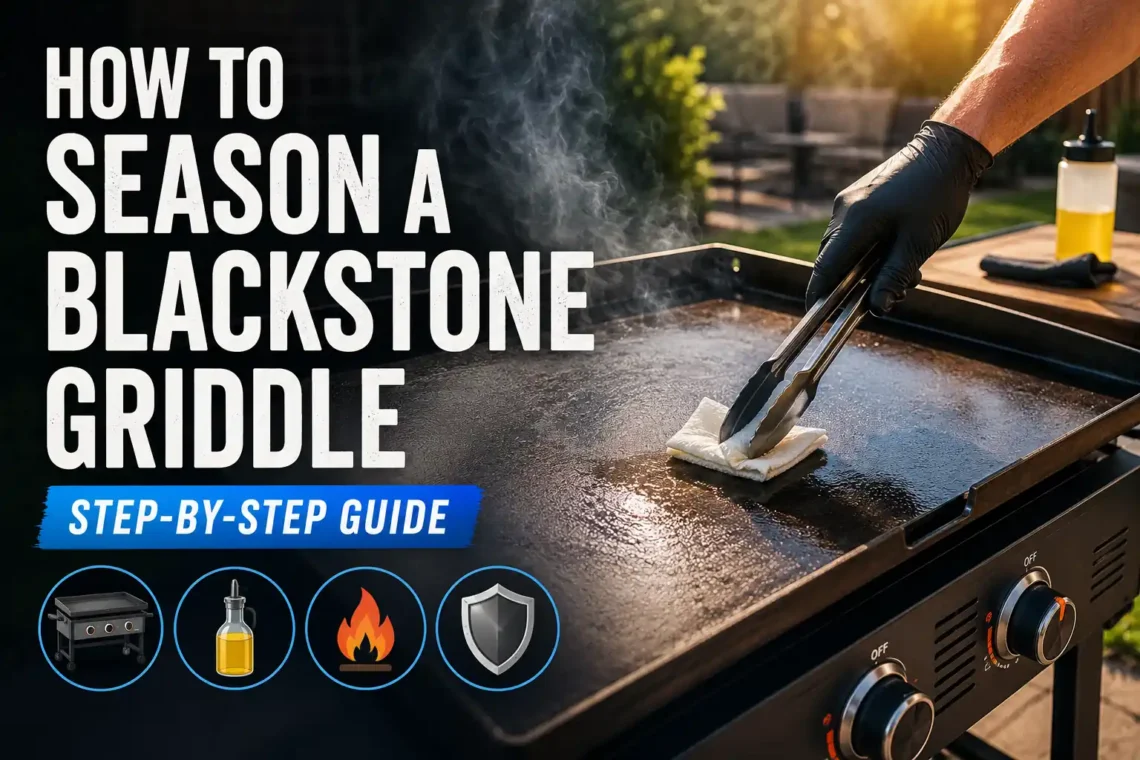
A Blackstone griddle can become one of the most versatile cooking tools you own, but it needs proper seasoning before you start cooking. Seasoning creates a natural non-stick surface, protects the steel from rust, and improves the flavor of every meal you prepare.
Many new Blackstone owners worry they’ll ruin their griddle by seasoning it incorrectly. Fortunately, the process is straightforward when you follow the right steps. Whether you’ve just unboxed a brand-new griddle or you’re restoring an older one, this guide will show you how to season a Blackstone griddle properly for long-lasting performance.
What Does It Mean to Season a Blackstone Griddle?
Seasoning is the process of applying thin layers of cooking oil to the steel cooking surface and heating it until the oil bonds with the metal. This process, known as polymerization, creates a hard protective coating.
A properly seasoned griddle offers several benefits:
- Prevents rust
- Creates a natural non-stick cooking surface
- Improves food release
- Makes cleaning easier
- Extends the life of the griddle
Unlike non-stick coatings, seasoning becomes better with regular use and proper maintenance.
Why Seasoning Is Important
Without seasoning, the steel surface is exposed to moisture and oxygen, which can quickly lead to rust.
A well-seasoned Blackstone griddle also helps prevent food from sticking. Burgers, pancakes, eggs, vegetables, and steaks all cook more evenly on a properly seasoned surface.
Think of seasoning as building a protective shield that gets stronger every time you cook.
What You’ll Need
Gather everything before you begin.
- Blackstone griddle
- High smoke-point cooking oil
- Paper towels
- Heat-resistant tongs
- Griddle scraper
- Disposable gloves (optional)
Best Oils for Seasoning
Choose an oil with a high smoke point.
Popular options include:
- Avocado oil
- Canola oil
- Grapeseed oil
- Vegetable oil
- Flaxseed oil (less commonly used)
Avoid butter or olive oil for the initial seasoning because they have lower smoke points.
Step 1: Clean the New Griddle
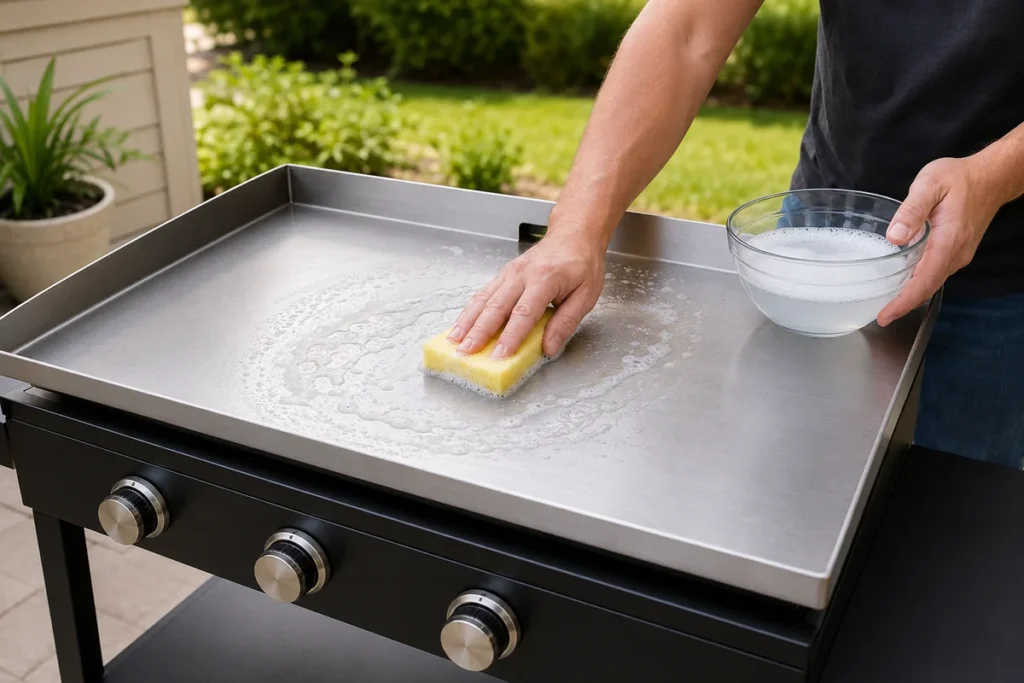
New Blackstone griddles often have a factory protective coating.
Wash the cooking surface with warm water and a small amount of mild dish soap.
Use a soft cloth or sponge to remove any manufacturing residue.
After washing, rinse thoroughly and dry the surface completely.
Dish soap is only recommended for this initial cleaning before the first seasoning.
Step 2: Heat the Griddle
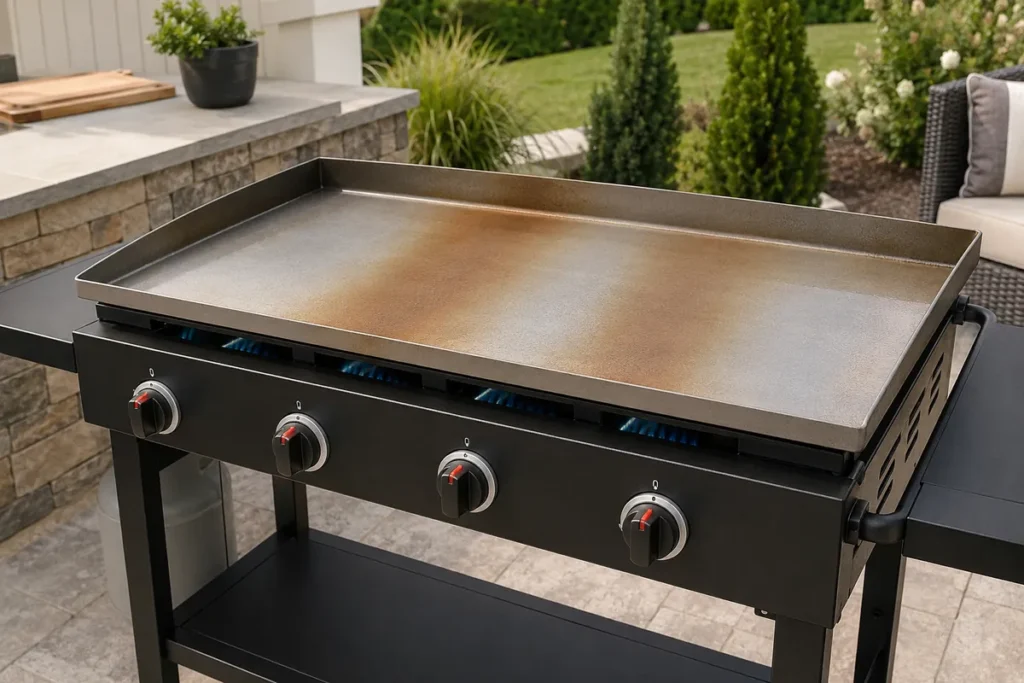
Turn all burners to high.
Allow the griddle to heat for about 10 to 15 minutes.
The surface will begin changing color from silver to light brown.
This is normal and shows the steel is heating properly.
Step 3: Apply a Thin Layer of Oil
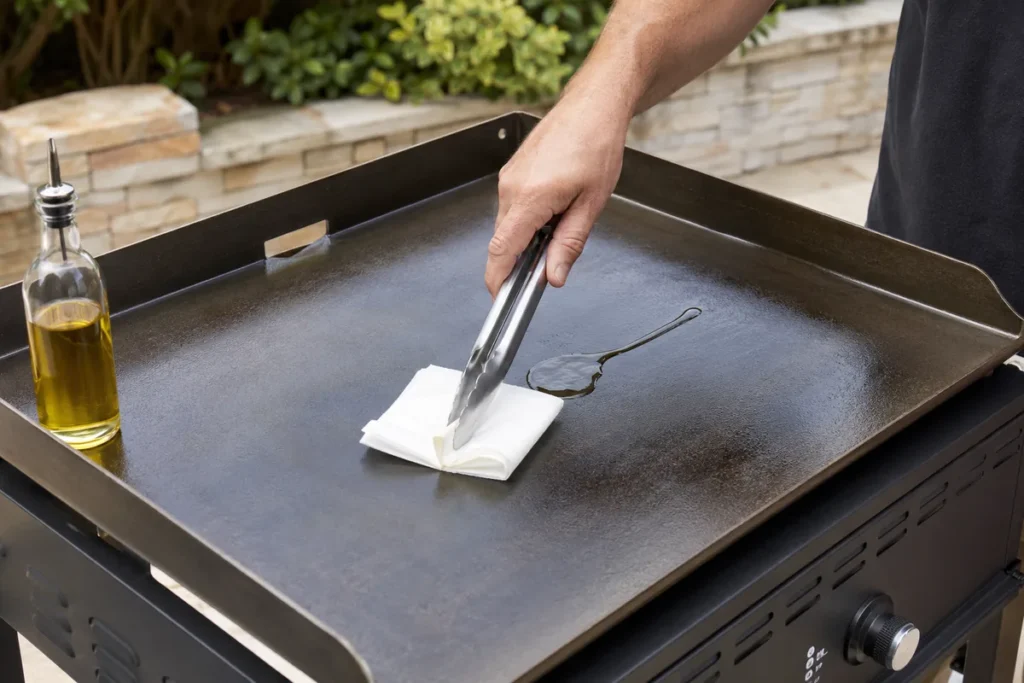
Once the griddle is hot, reduce the heat slightly if needed.
Pour a small amount of oil onto the center of the cooking surface.
Using folded paper towels held with tongs, spread the oil across the entire griddle.
Cover:
- Cooking surface
- Corners
- Edges
- Side walls
The layer should be very thin.
Too much oil can create sticky spots instead of a smooth finish.
Step 4: Let the Oil Smoke
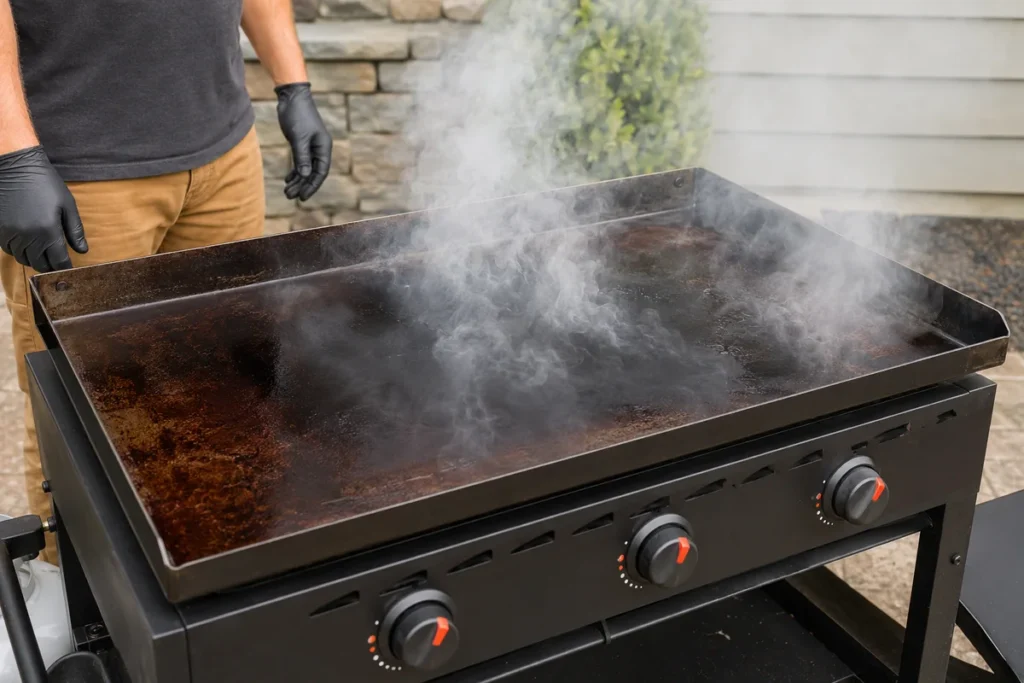
Increase the heat again.
The oil will begin smoking heavily.
Don’t wipe it away.
Allow the smoke to continue until it naturally slows and nearly stops.
This usually takes around 10 to 15 minutes.
The smoking process is what bonds the oil to the steel.
Step 5: Repeat the Process
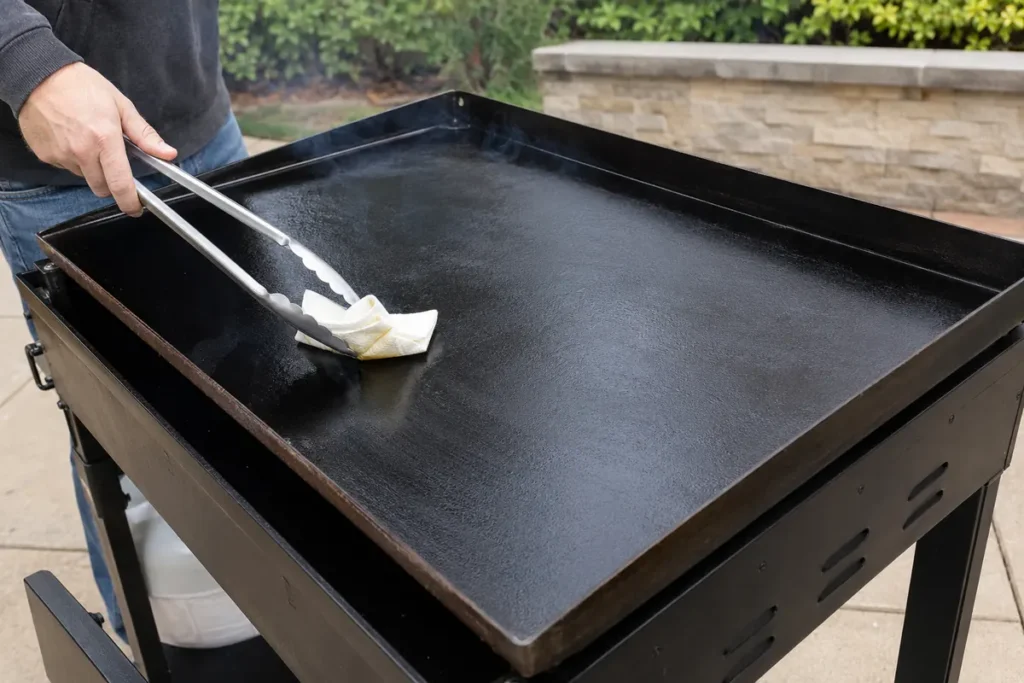
Apply another thin coat of oil.
Repeat the heating and smoking process.
Most Blackstone owners recommend applying 4 to 6 thin coats during the initial seasoning.
Each layer strengthens the protective surface.
The cooking top should gradually become darker.
Step 6: Let the Griddle Cool
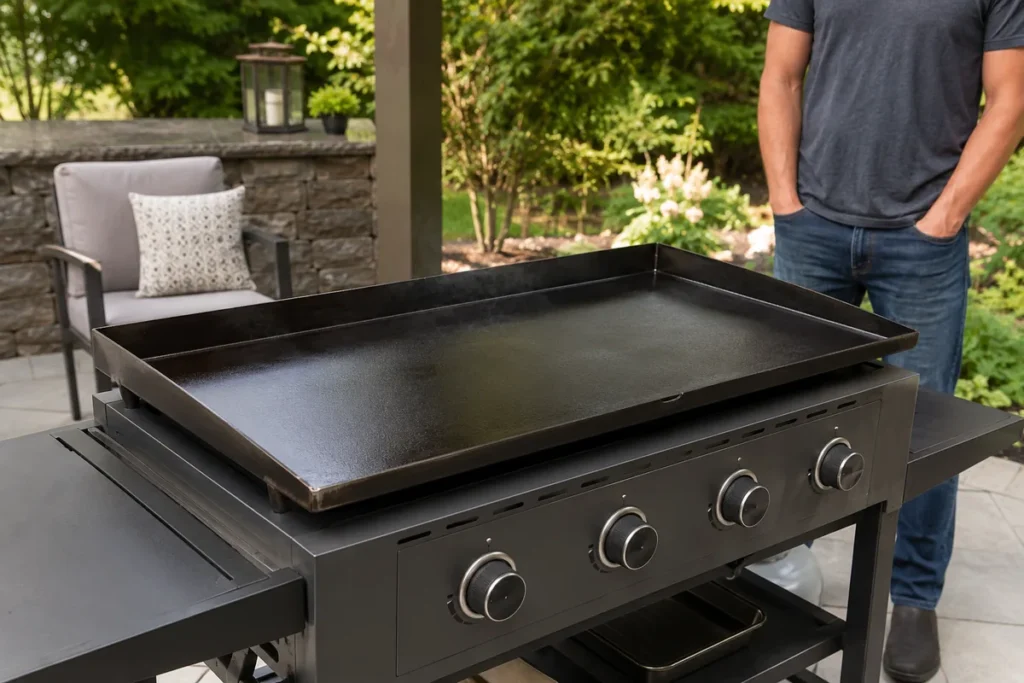
Once you’ve completed the final coat, turn off the burners.
Allow the griddle to cool naturally.
Avoid pouring cold water on the hot surface because rapid temperature changes may warp the steel.
What a Properly Seasoned Griddle Looks Like
A well-seasoned Blackstone typically develops:
- Dark brown color
- Deep bronze appearance
- Nearly black finish
- Smooth surface
- Slight shine
The appearance continues improving as you cook more meals.
Don’t expect a perfectly black surface after the first seasoning session.
Common Mistakes to Avoid
Many seasoning problems come from a few common mistakes.
Using Too Much Oil
Thick oil layers become sticky rather than smooth.
Always use thin coats.
Not Heating Long Enough
The oil needs enough time to polymerize completely.
If you stop too early, the seasoning won’t bond correctly.
Using the Wrong Oil
Low smoke-point oils burn too quickly and don’t create the best protective coating.
Skipping Multiple Coats
One layer isn’t enough.
Several thin layers produce much better results.
Cooking Acidic Foods Too Soon
Foods like tomatoes, vinegar, and citrus can weaken fresh seasoning.
Cook burgers, bacon, onions, or pancakes first to strengthen the surface.
How to Maintain Your Seasoning
Good maintenance keeps your griddle performing like new.
After cooking:
- Scrape away food residue.
- Wipe the surface clean.
- Heat the griddle briefly.
- Apply a very thin layer of oil.
- Let it cool before storing.
This simple routine strengthens the seasoning over time.
Once your griddle is properly seasoned, learning how to prepare food neatly is just as important. Our guide on How to Wrap a Burrito shares simple techniques for serving meals without making a mess.
How Often Should You Re-Season?
Most people don’t need to perform a full seasoning after every cook.
Instead, re-season if:
- Rust appears
- Food sticks excessively
- The surface looks dull
- The protective coating wears away
Regular cooking naturally maintains the finish.
What If Your Griddle Rusts?
Surface rust isn’t the end of your griddle.
You can restore it by:
- Scraping away rust.
- Sanding affected areas if necessary.
- Cleaning thoroughly.
- Drying completely.
- Repeating the full seasoning process.
Many heavily rusted Blackstone griddles can be restored successfully.
Can You Cook Immediately After Seasoning?
Yes.
Once the final seasoning layer has cooled slightly, you can begin cooking.
For your first few meals, choose foods that help build seasoning naturally.
Good choices include:
- Bacon
- Burgers
- Hash browns
- Onions
- Steak
These foods leave behind oils that continue improving the cooking surface.
Seafood is one of the most popular foods cooked on a flat-top griddle. Before your next seafood cookout, check out our guide on How to Eat Crawfish.
Tips for Long-Term Success
Keeping your griddle in excellent condition is simple.
- Store it under a weather-resistant cover.
- Avoid leaving standing water on the surface.
- Apply a light coat of oil after each use.
- Keep the cooking surface dry.
- Cook regularly to strengthen the seasoning.
A well-maintained Blackstone can last for many years.
Final Thoughts
Learning how to season a Blackstone griddle is one of the best ways to protect your investment and improve your cooking experience. By applying several thin coats of high smoke-point oil and allowing each layer to bond properly, you’ll create a durable, naturally non-stick cooking surface that becomes better with every meal. With regular maintenance and proper care, your Blackstone griddle will stay rust-resistant and ready for everything from breakfast to backyard cookouts.
Planning a backyard BBQ? After cooking, keep the fun going by learning How to Rack Pool Balls for your next game night.
FAQs
1. What is the best oil to season a Blackstone griddle?
Avocado oil, canola oil, grapeseed oil, and vegetable oil are all excellent choices because they have high smoke points.
2. How many times should I season a new Blackstone?
Most experts recommend applying 4 to 6 thin coats during the initial seasoning.
3. Can I use olive oil?
It’s not recommended for the initial seasoning because olive oil has a relatively low smoke point.
4. Why is my Blackstone sticky after seasoning?
Sticky spots usually happen when too much oil is applied or the oil wasn’t heated long enough to fully bond.
5. Do I need to season my griddle after every use?
No. Simply clean it, apply a light coat of oil, and store it properly. A full re-seasoning is only needed if the surface becomes damaged or rusty.
📚 Related Guides
Want to improve your outdoor cooking skills? Check out these helpful step-by-step guides: