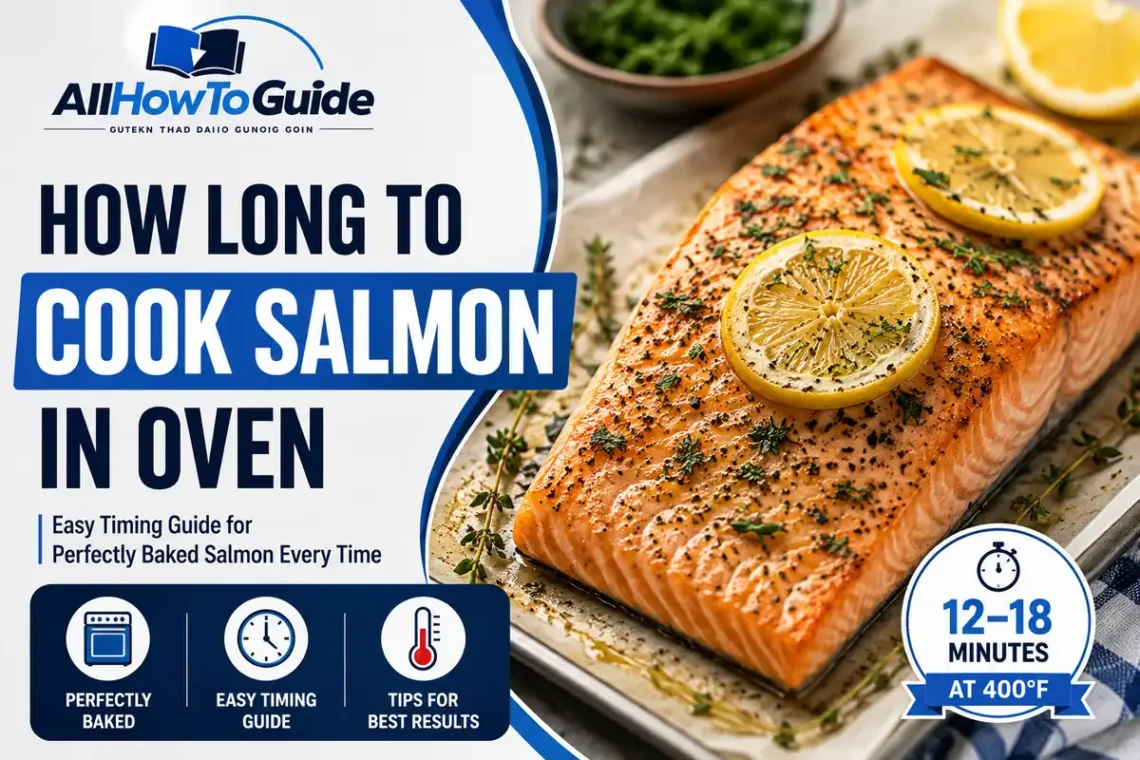
Cooking salmon in the oven is one of those meals that looks fancy on the plate but is actually very simple to make. The real challenge is getting the timing right. Cook it for too little, and the center may not be ready. Leave it in for too long, and you can end up with dry, tough salmon.
For most salmon fillets, 400°F (204°C) for around 12 to 18 minutes is a good starting point, especially when the fillet is about 1 inch thick. Thinner pieces can cook faster, while thick center-cut pieces need additional time.
The best results come from paying attention to the thickness of the fish rather than following the clock alone. In this guide, you’ll learn exactly how to prepare, season, bake, and check salmon so you can get a tender and flavorful result every time.
If you enjoy seafood recipes, you may also want to learn how to eat crawfish with our simple beginner-friendly guide.
Why Oven-Baked Salmon Is So Easy
Salmon is naturally flavorful and contains enough fat to stay moist when cooked properly. Unlike some meats that require long preparation, salmon can go from refrigerator to dinner plate fairly quickly.
The oven also makes the process simple because you don’t need to stand over a pan or constantly turn the fish. Once the salmon is prepared and placed in the oven, you can focus on preparing your side dishes while it cooks.
How Long Does Salmon Take to Cook in the Oven?
The cooking time depends mainly on the thickness of the salmon and the oven temperature.
For a typical fillet around 1 inch thick, these are useful starting points:
| Oven Temperature | Approximate Cooking Time |
|---|---|
| 350°F (175°C) | 20–25 minutes |
| 375°F (190°C) | 15–20 minutes |
| 400°F (204°C) | 12–18 minutes |
| 425°F (218°C) | 10–15 minutes |
| 450°F (232°C) | 10–15 minutes |
These times are estimates rather than strict rules. A thin piece may finish earlier, while a thick piece can take longer.
Step 1: Choose Your Salmon
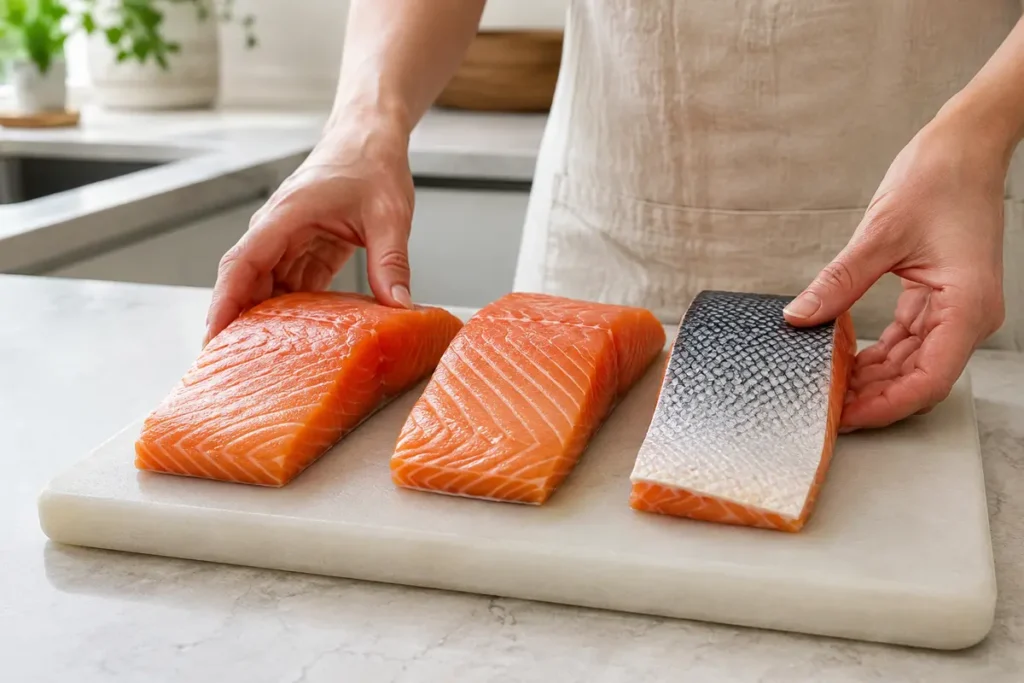
Start with fresh salmon or salmon that has been properly thawed.
Fillets with a similar thickness are easiest to cook because they tend to finish at roughly the same time. If you’re cooking several pieces, try to avoid mixing very thin tail pieces with extremely thick center portions unless you’re prepared to remove the thinner pieces earlier.
Skin-on salmon is also a good choice for oven cooking. The skin provides a protective layer between the fish and the hot baking surface.
Step 2: Preheat the Oven
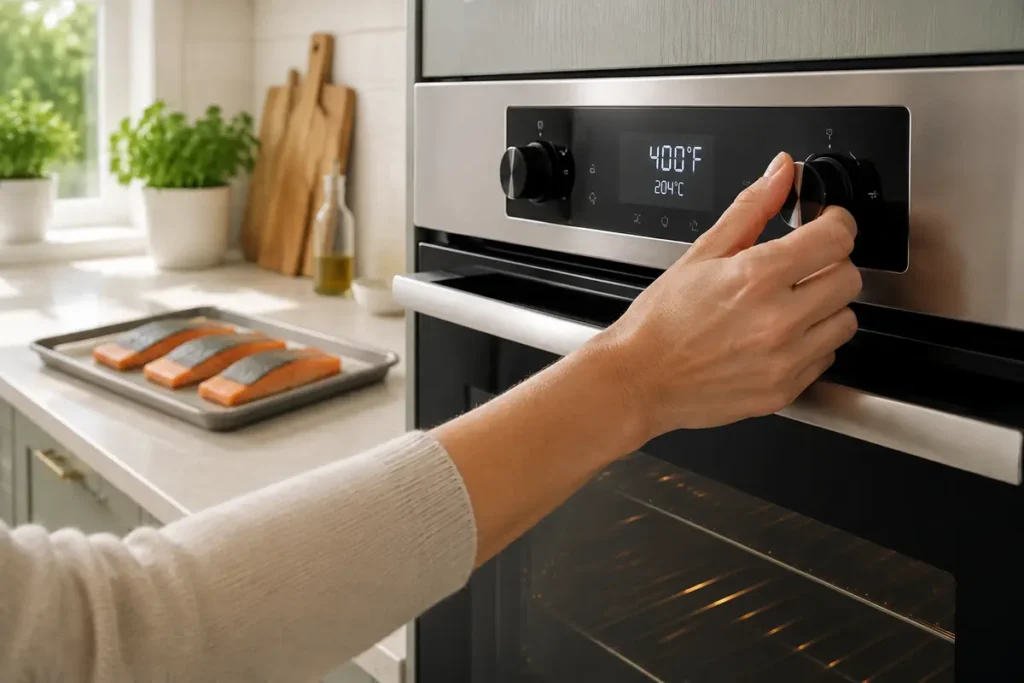
Set your oven to 400°F (204°C) and allow it to fully preheat.
This temperature is a useful middle ground because it cooks the salmon fairly quickly without requiring the extremely high heat that can make the outside dry before the center is ready.
If you’re in a hurry, you can use 425°F or 450°F, but you’ll want to start checking the salmon sooner.
Step 3: Prepare the Baking Sheet
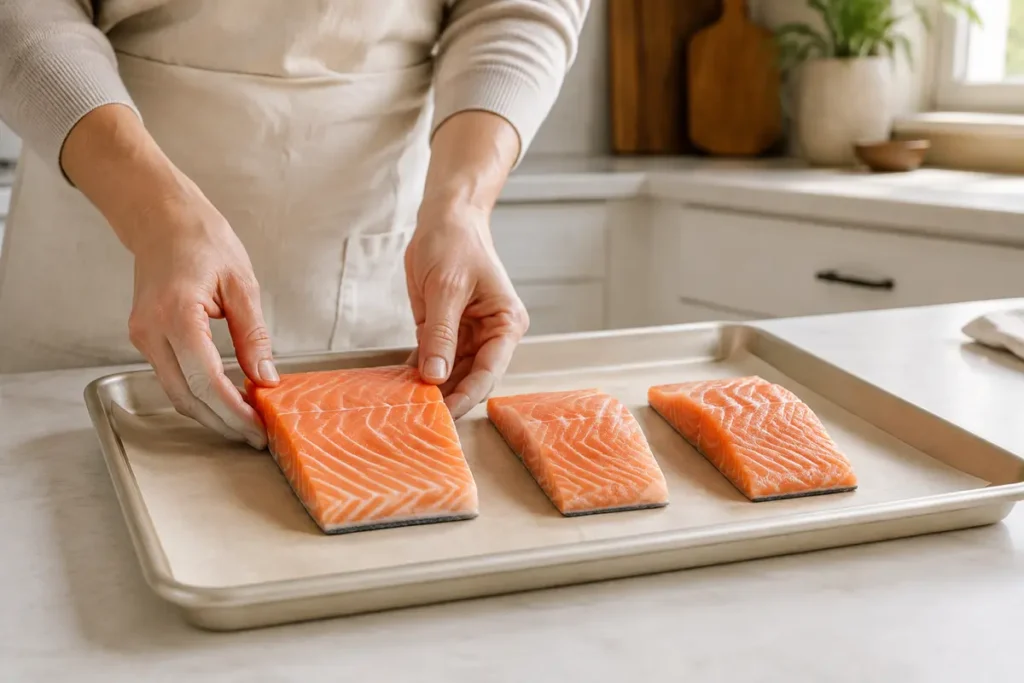
Line a baking sheet with parchment paper or aluminum foil.
This isn’t absolutely necessary, but it makes cleanup much easier and helps prevent the salmon from sticking to the pan.
If you’re using skin-on salmon, place the pieces skin-side down on the prepared baking sheet.
Step 4: Pat the Salmon Dry
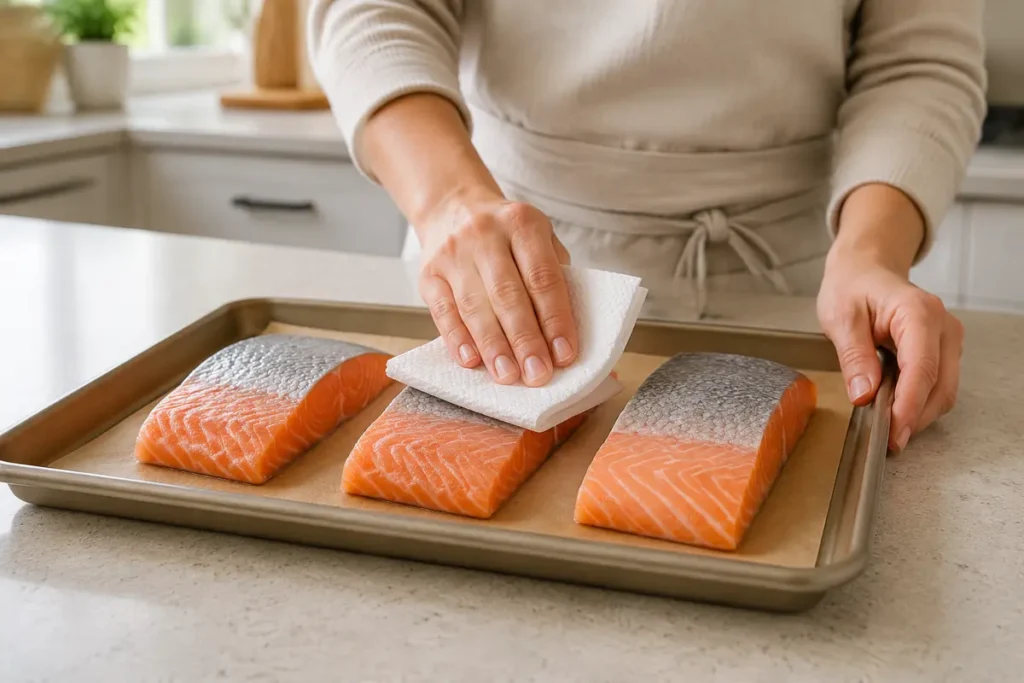
Before adding oil or seasoning, gently pat the salmon with paper towels.
Removing excess moisture helps the seasoning stick to the surface and can also encourage better browning during baking.
You don’t need to press hard. Simply pat the surface until it feels reasonably dry.
Step 5: Add Oil and Seasonings
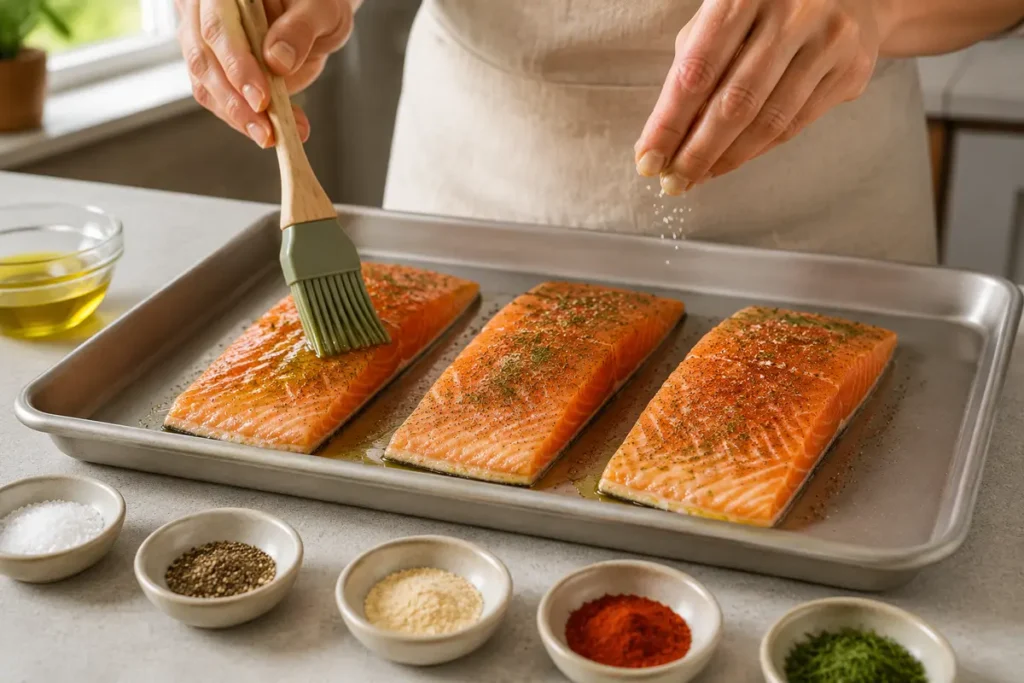
Brush the salmon lightly with olive oil or melted butter.
For a simple seasoning, use:
- Salt
- Black pepper
- Garlic powder
- A little paprika
- Fresh or dried dill
- Lemon slices
You don’t need to cover the salmon with a thick layer of seasoning. A light coating allows the natural flavor of the fish to remain noticeable.
Step 6: Add Lemon and Herbs
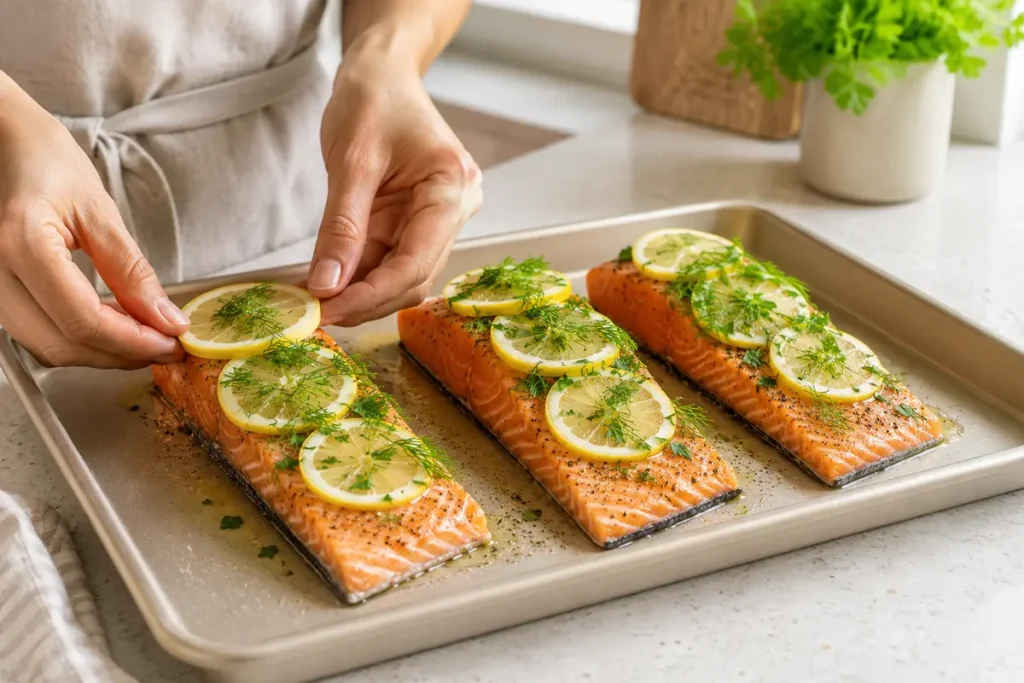
Place a few thin lemon slices over the top of each fillet.
You can also add fresh dill, parsley, rosemary, or thyme.
The lemon adds a bright flavor that works especially well with salmon, while fresh herbs give the fish a cleaner, more aromatic taste.
Step 7: Put the Salmon in the Oven
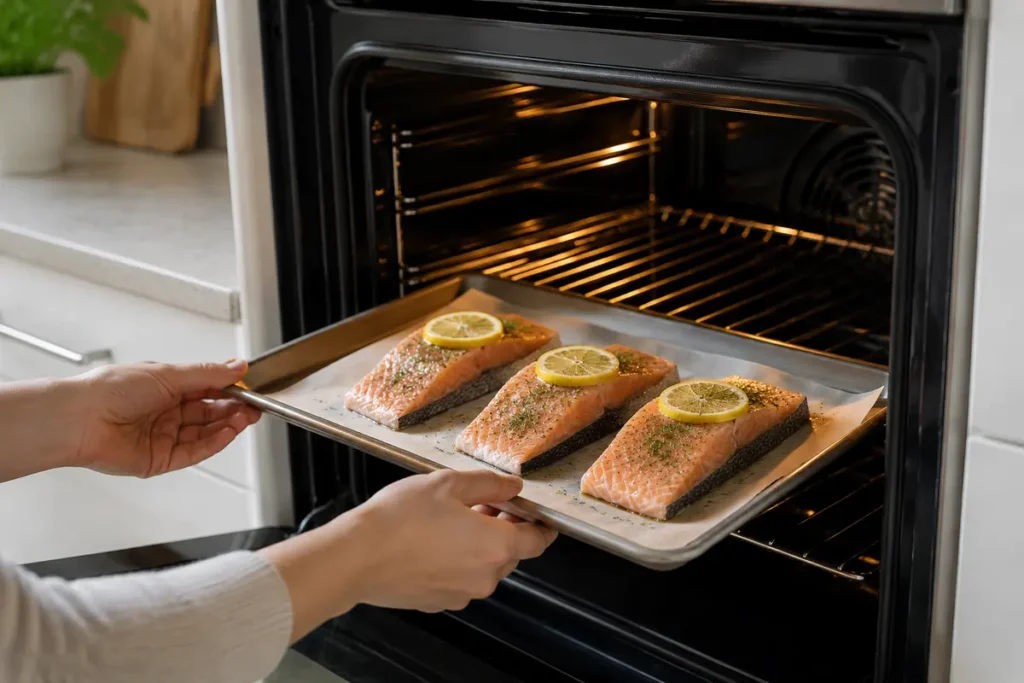
Place the baking sheet on the middle rack of your preheated oven.
For an average 1-inch-thick fillet at 400°F, start checking the salmon at around 12 minutes.
If it isn’t ready, return it to the oven and check again after another 2–3 minutes.
This approach is better than automatically baking it for the longest suggested time because ovens and salmon portions can vary.
Step 8: Check Whether the Salmon Is Done
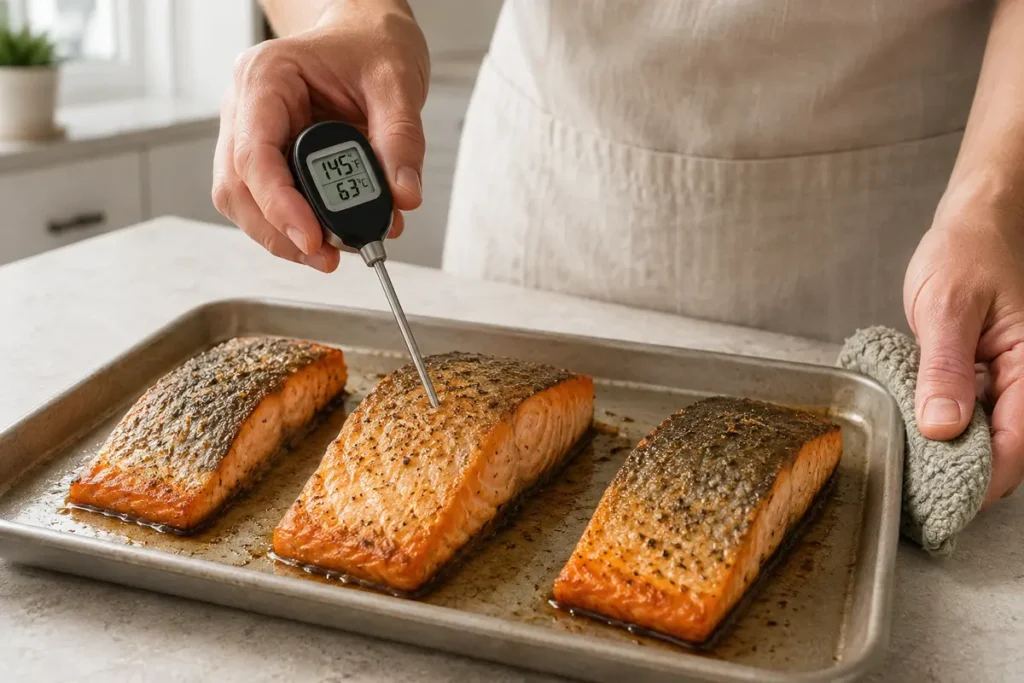
The thickest part of the salmon is the area you need to check.
If you have an instant-read food thermometer, insert it into the center of the thickest portion without touching the baking tray.
For a reliable food-safety check, the salmon should reach 145°F (63°C) internally.
If you don’t have a thermometer, gently separate the thickest part with a fork. Properly cooked salmon should look opaque and should flake apart easily.
Step 9: Remove and Rest the Salmon
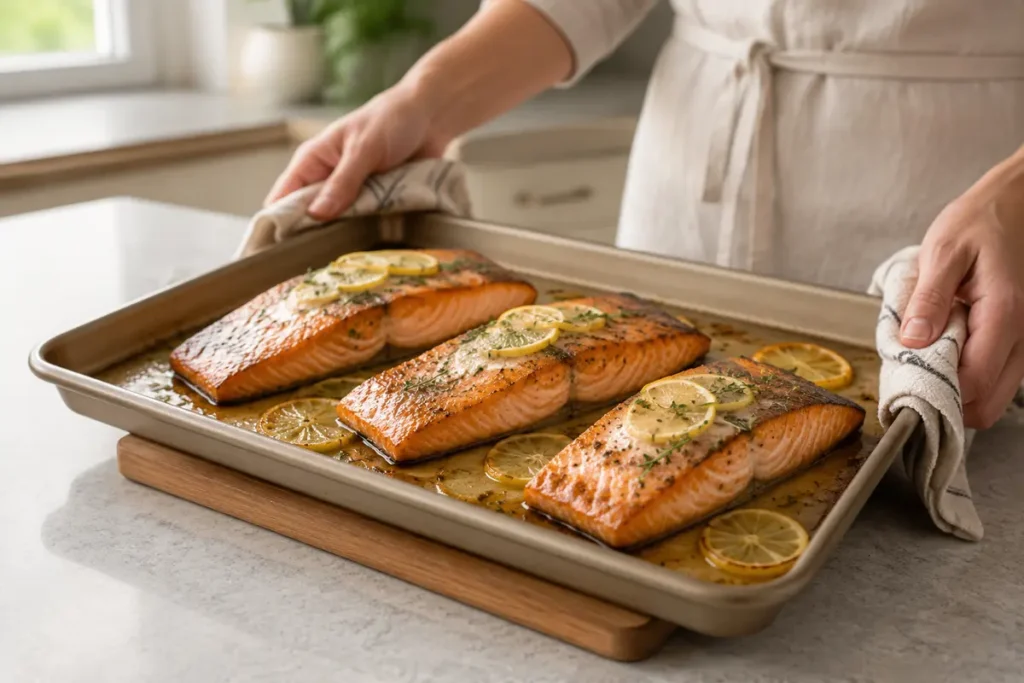
Once the salmon is cooked, remove the tray from the oven.
Let the fish rest for approximately 3–5 minutes before serving.
This short resting period allows the juices to settle and makes the salmon easier to serve without immediately falling apart.
How Long to Cook Thin Salmon Fillets
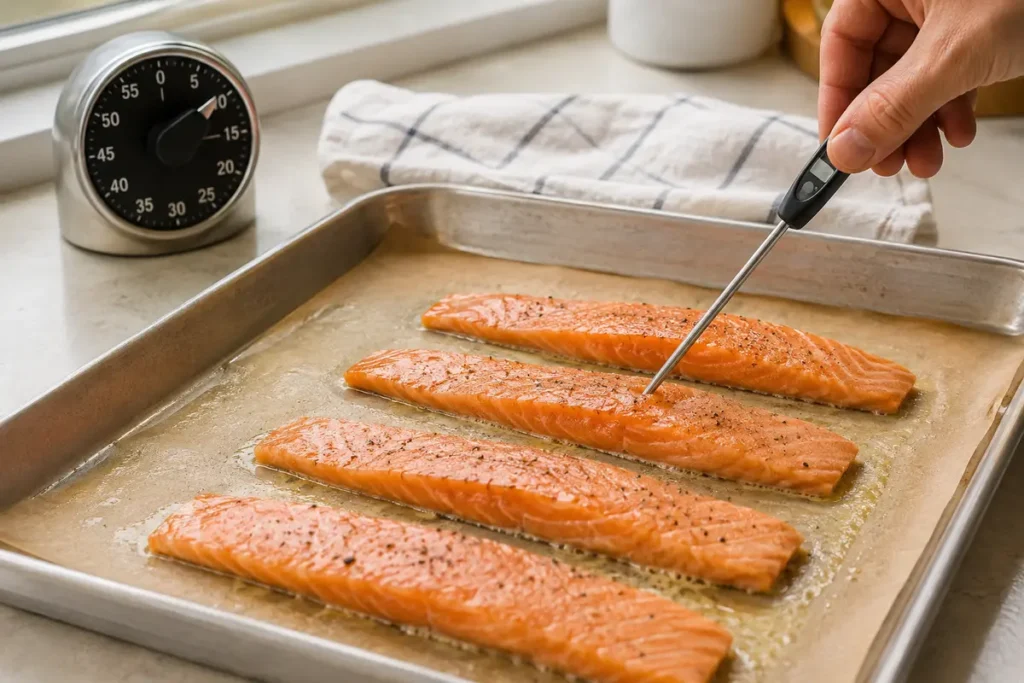
Thin salmon pieces cook much faster than thick center-cut portions.
At 400°F, a thin fillet may take around 10–14 minutes. Start checking early because thin salmon can become dry quickly once it passes its ideal cooking point.
If you’re cooking different-sized pieces together, check the thinnest piece first and remove it if necessary while the thicker pieces continue cooking.
How Long to Cook Thick Salmon Fillets
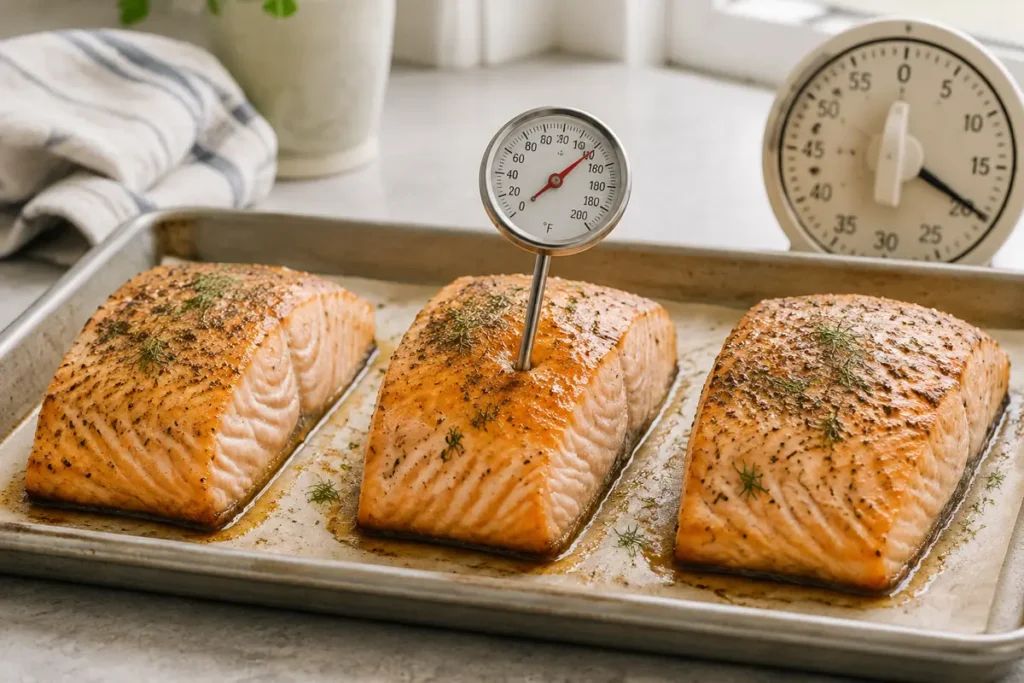
Thick salmon requires more patience.
A thick center-cut fillet may need approximately 18–25 minutes at 400°F, depending on its thickness and starting temperature.
Rather than relying entirely on the clock, check the thickest part with a thermometer. This is particularly helpful when cooking a large piece of salmon instead of individual portions.
How Long to Cook Salmon at 425°F
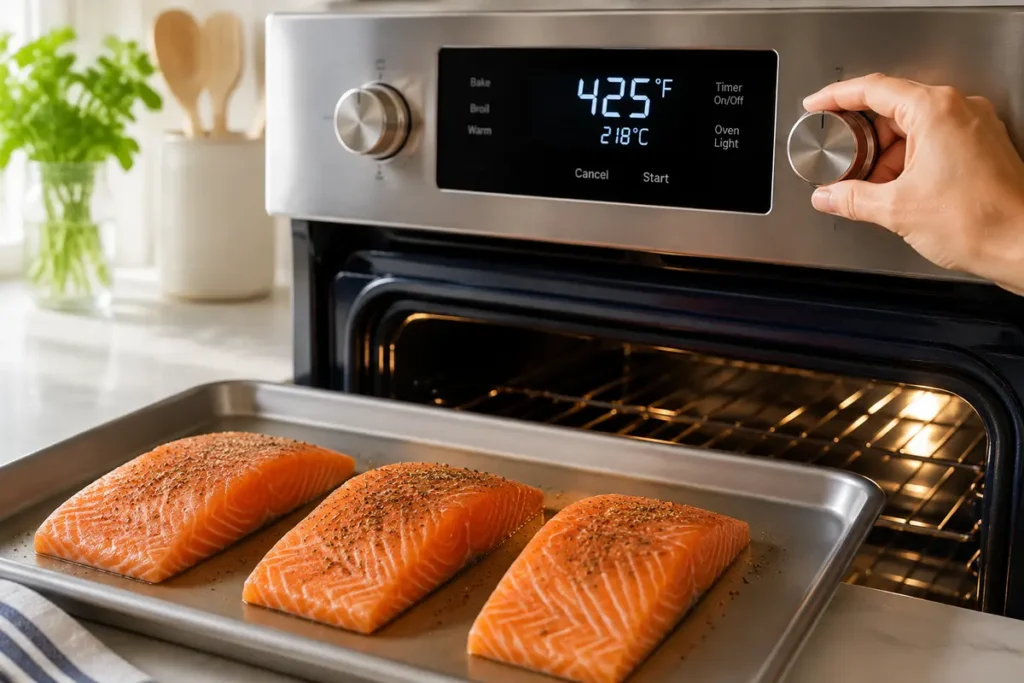
Cooking salmon at 425°F (218°C) is a good option when you want dinner ready a little faster.
A typical 1-inch-thick fillet may take around 10–15 minutes.
Because the oven is hotter, begin checking the salmon earlier than you would at 400°F. The edges can become dry if the fish stays in the oven too long.
How Long to Cook Salmon at 450°F
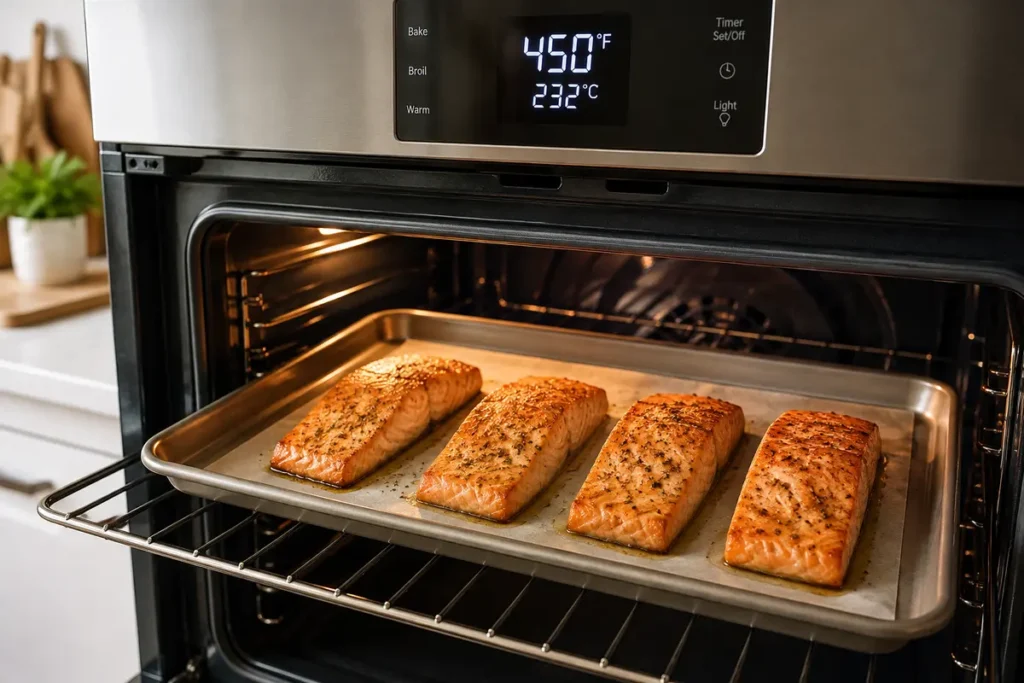
At 450°F (232°C), salmon cooks quickly and can develop a nicely browned surface.
Most average fillets can take roughly 10–15 minutes, depending on thickness.
This higher temperature works particularly well when you’re looking for a quicker meal, but it requires more attention because the difference between perfectly cooked and overcooked salmon can be surprisingly small.
Should You Bake Salmon Covered or Uncovered?
Both methods work, and each produces a slightly different result.
Baking Uncovered
Leaving salmon uncovered allows the surface to brown more easily and gives the fish a more roasted appearance.
This is the easiest option when you want a slightly firmer, more flavorful surface.
Baking Covered
Covering the salmon loosely with foil traps moisture and creates a gentler cooking environment.
This can be useful if you’re worried about the fish drying out. The downside is that the top won’t brown as much.
For everyday cooking, uncovered salmon is usually the simplest approach.
How to Keep Salmon Moist
The biggest mistake people make is simply leaving salmon in the oven too long.
Start checking the fish toward the lower end of the estimated cooking time. If it needs another few minutes, you can always put it back in the oven.
A light coating of olive oil or butter can also help keep the surface from drying out. Adding lemon slices or a light sauce provides additional flavor without requiring complicated preparation.
Easy Garlic Lemon Salmon
If you want a simple seasoning combination, garlic and lemon are hard to beat.
Ingredients
- 4 salmon fillets
- 1–2 tablespoons olive oil
- 2 cloves garlic, minced
- 1 lemon
- Salt
- Black pepper
- ½ teaspoon dried dill
Prepare the Salmon
Pat the fillets dry and place them skin-side down on a lined baking sheet.
Add the Seasoning
Mix olive oil, garlic, salt, pepper, and dill. Brush the mixture over the salmon.
Add Lemon
Place a few lemon slices on top.
Bake
Bake at 400°F and begin checking the fish after approximately 12 minutes.
Finish and Serve
Once cooked, remove the salmon and let it rest for a few minutes before serving.
Easy Honey Garlic Salmon
For a sweeter flavor, make a quick glaze using:
- 1 tablespoon honey
- 1 tablespoon olive oil
- 1 teaspoon minced garlic
- 1 teaspoon lemon juice
- A pinch of black pepper
Brush the mixture over the salmon before baking.
The honey caramelizes as it cooks, giving the surface a slightly sweet and golden finish.
Common Mistakes When Cooking Salmon
Using the Same Time for Every Fillet
A thin fillet and a thick fillet won’t cook at exactly the same speed.
Always consider thickness when estimating cooking time.
Overcooking the Fish
Dry, firm salmon is usually the result of leaving it in the oven too long.
Start checking earlier rather than waiting until the maximum cooking time has passed.
Not Preheating the Oven
A partially heated oven makes cooking times unpredictable.
Allow the oven to reach the desired temperature before placing the salmon inside.
Adding Too Much Oil
Salmon already contains natural fat, so you only need a light coating of oil or butter.
Too much can make the surface greasy rather than nicely roasted.
Opening the Oven Too Often
Every time you open the oven, heat escapes.
Try to leave the salmon alone until you’re close to the expected finishing time.
What to Serve With Oven-Baked Salmon
Salmon works with almost any simple side dish.
For a classic dinner, try roasted potatoes, green beans, and lemon.
For a lighter meal, serve the fish with broccoli, asparagus, a fresh salad, or steamed vegetables.
Rice, quinoa, couscous, and roasted sweet potatoes also pair particularly well with salmon.
If you’re looking for another simple dinner idea, our guide on how to cook a steak covers the basic steps for preparing a flavorful homemade meal.
How to Store Leftover Salmon
If you have leftover salmon, allow it to cool and place it in an airtight container.
Keep it refrigerated and use it within a few days for the best quality.
Leftover salmon can be reheated gently in the oven or microwave, but avoid overheating it because reheating for too long can make the fish dry.
You can also flake cold leftover salmon over a salad, add it to a sandwich, or use it in a rice bowl.
Can You Cook Salmon From Frozen?
Yes, you can cook salmon from frozen, although it will generally take longer than thawed fish.
For easier and more predictable cooking, thaw the salmon in the refrigerator first.
If you do cook it from frozen, don’t rely on the normal cooking time for thawed fillets. Check the thickest part carefully before serving.
For another easy homemade snack, check out our guide on how to make pumpkin seeds for crispy roasted seeds with simple seasoning ideas.
Final Thoughts
Once you understand how thickness and oven temperature affect cooking time, preparing salmon becomes much less complicated. For an average fillet, 400°F for around 12–18 minutes is a useful starting point, while thinner pieces may finish sooner and thicker portions may need additional time.
The most important thing is to start checking the fish before you think it’s finished. Use a food thermometer when possible, keep the seasoning simple, and avoid leaving the salmon in the oven longer than necessary.
With this basic method, you can easily change the seasonings, sauces, and side dishes while keeping the same simple cooking process.
FAQs
1. How long to cook salmon in oven at 400°F?
A typical 1-inch-thick fillet usually takes around 12–18 minutes, but the exact time depends on thickness and the individual oven.
2. How do I know when salmon is done?
The center should be opaque and the flesh should flake easily with a fork. A food thermometer gives you a more reliable check.
3. Should salmon be covered with foil?
It doesn’t have to be. Uncovered salmon develops more color, while covered salmon tends to retain more moisture.
4. Can I cook salmon straight from frozen?
Yes, but frozen salmon generally takes longer. Thawing it in the refrigerator first makes the cooking process easier to predict.
5. What temperature is best for baking salmon?
400°F (204°C) is a convenient everyday temperature. You can also use 425°F or 450°F when you want faster cooking, but you’ll need to monitor the fish more closely.