
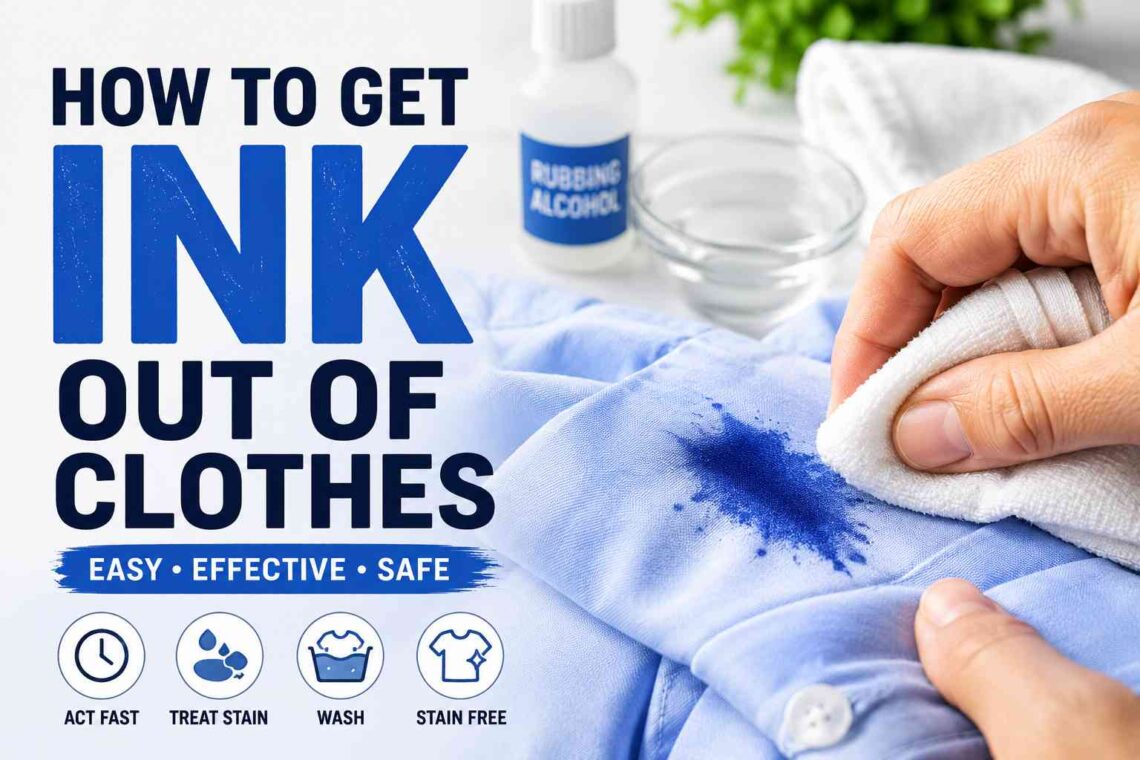
Few laundry problems are as frustrating as discovering an ink stain on your favorite shirt, jeans, or dress. Whether a pen leaked in your pocket, a child drew on their clothing, or a marker accidentally touched fabric, ink can seem impossible to remove. The good news is that many ink stains can be treated successfully if you use the right method and act quickly.
In this guide, you’ll learn how to get ink out of clothes using simple techniques that work on different types of ink and fabric. We’ll also cover common mistakes to avoid, when a stain may be permanent, and how to protect your clothes during the cleaning process.
Why Ink Stains Are Difficult to Remove
Ink is designed to bond with surfaces, making it more stubborn than many other household stains. Different pens and markers contain different pigments, dyes, oils, and solvents, which means there isn’t a single solution for every stain.
The success of stain removal depends on several factors, including:
- The type of ink
- The type of fabric
- How long the stain has been there
- Whether the garment has already been washed or dried
Fresh stains are generally much easier to remove than stains that have already set into the fabric.
Identify the Type of Ink First
Before treating the stain, it’s helpful to know what caused it. Different inks respond better to different cleaning methods.
Common types include:
- Ballpoint pen ink
- Gel pen ink
- Fountain pen ink
- Permanent marker
- Washable marker
If you’re unsure which type it is, start with the gentlest cleaning method before moving to stronger stain removers.
Act Quickly for the Best Results
Time plays a major role in stain removal. Fresh ink is still sitting on the surface of the fabric, while older stains begin to soak into the fibers.
As soon as you notice the stain:
- Remove the garment if possible.
- Place a clean towel or paper towel beneath the stained area.
- Avoid rubbing the stain, as this can spread the ink.
- Blot gently to absorb excess ink.
These simple steps prevent the stain from becoming larger.
Check the Fabric Care Label
Before using any cleaning product, read the garment’s care label.
Some delicate materials, including silk, wool, rayon, and leather, require special cleaning methods. Using harsh chemicals on these fabrics may cause discoloration or damage.
If the label says “Dry Clean Only,” it’s usually safest to let a professional cleaner handle the stain.
Method 1: Rubbing Alcohol
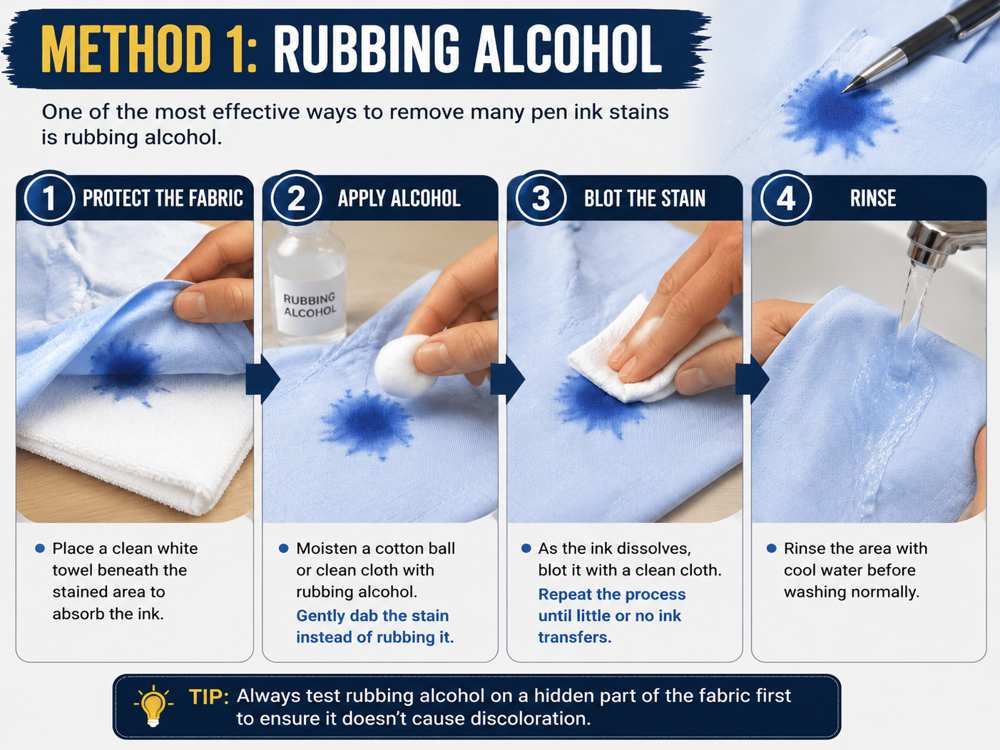
One of the most effective ways to remove many pen ink stains is rubbing alcohol.
Step 1: Protect the Fabric
Place a clean white towel beneath the stained area to absorb the ink.
Step 2: Apply Alcohol
Moisten a cotton ball or clean cloth with rubbing alcohol.
Gently dab the stain instead of rubbing it.
Step 3: Blot the Stain
As the ink dissolves, blot it with a clean cloth.
Repeat the process until little or no ink transfers.
Step 4: Rinse
Rinse the area with cool water before washing normally.
Method 2: Liquid Laundry Detergent
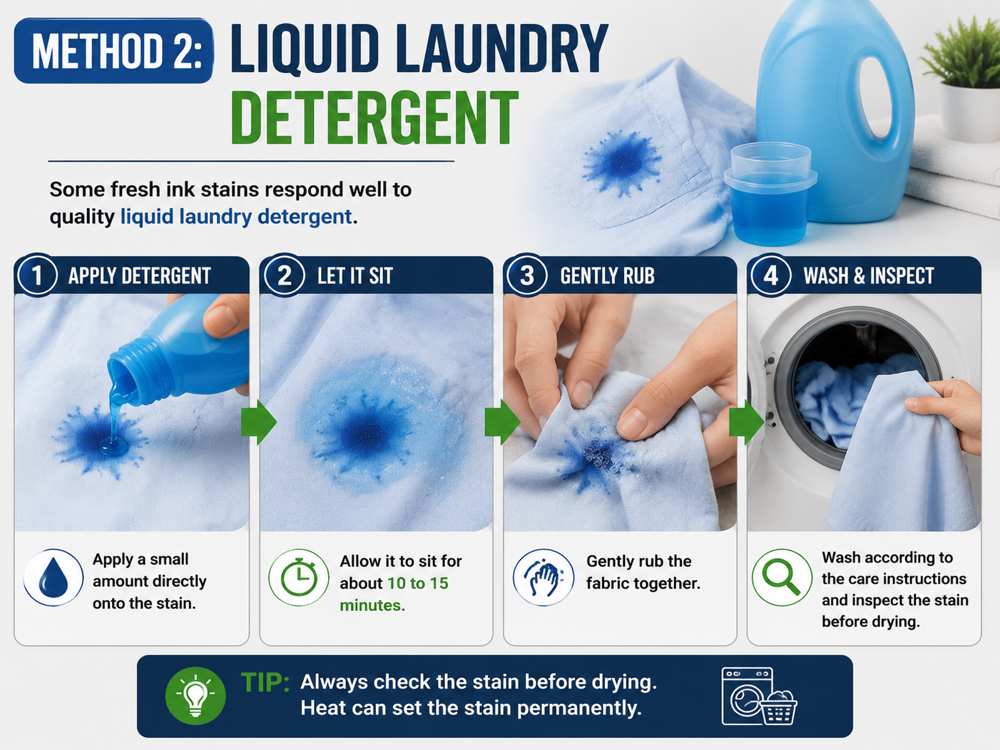
Some fresh ink stains respond well to quality liquid laundry detergent.
Apply a small amount directly onto the stain.
Allow it to sit for about 10 to 15 minutes before gently rubbing the fabric together.
Wash according to the care instructions and inspect the stain before drying.
Method 3: White Vinegar and Baking Soda
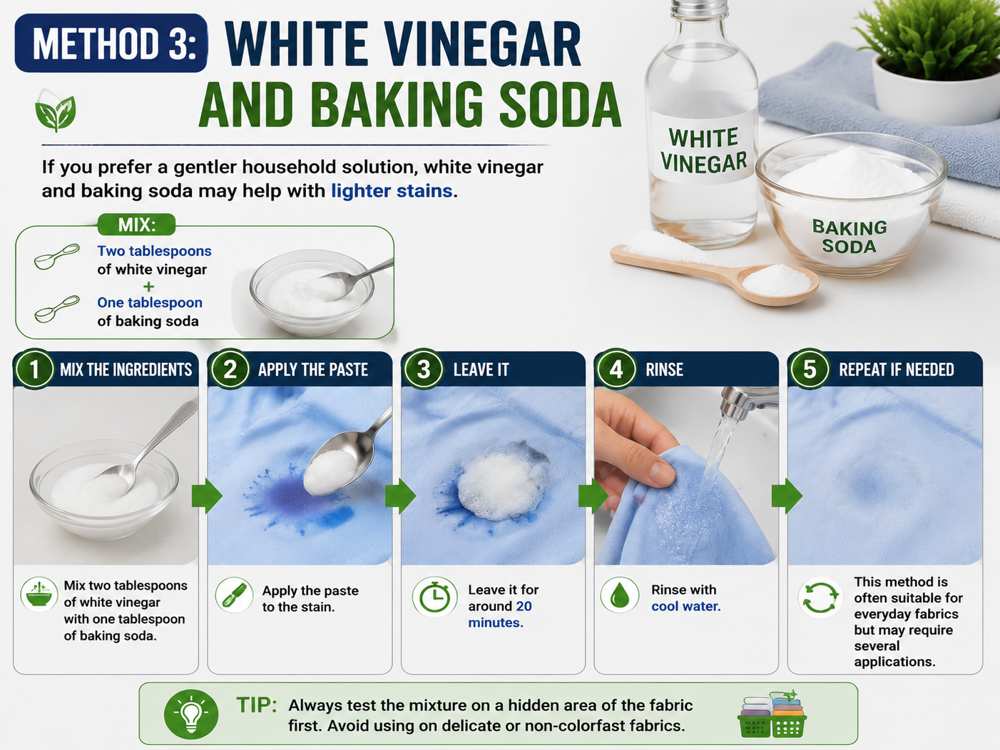
If you prefer a gentler household solution, white vinegar and baking soda may help with lighter stains.
Mix:
- Two tablespoons of white vinegar
- One tablespoon of baking soda
Apply the paste to the stain.
Leave it for around 20 minutes before rinsing with cool water.
This method is often suitable for everyday fabrics but may require several applications.
Method 4: Commercial Stain Removers
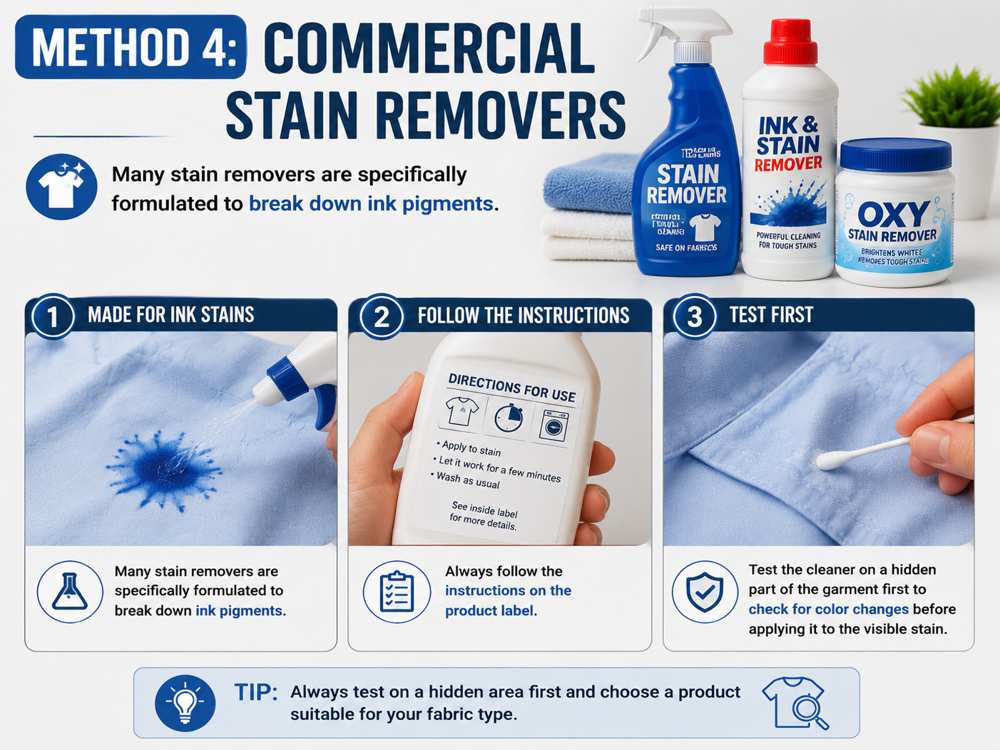
Many stain removers are specifically formulated to break down ink pigments.
Always follow the instructions on the product label.
Test the cleaner on a hidden part of the garment first to check for color changes before applying it to the visible stain.
Wash the Garment Correctly
After treating the stain, wash the garment using the warmest water recommended on its care label.
Avoid using bleach unless the fabric specifically allows it.
After washing, inspect the stained area carefully.
If any ink remains, repeat the treatment before placing the clothing in the dryer.
Heat from a dryer can permanently set any remaining stain.
Common Mistakes to Avoid
Many people accidentally make ink stains worse.
Avoid these mistakes:
Rubbing Too Hard
Aggressive rubbing spreads the ink deeper into the fabric.
Using Hot Water Immediately
Hot water can help set certain stains before they’ve been removed.
Drying Too Soon
Never dry clothing until you’re certain the stain is completely gone.
Mixing Cleaning Chemicals
Combining different stain removers or household chemicals may damage fabric or create dangerous fumes.
Removing Ink from Different Fabrics
Different materials require different levels of care.
Cotton
Cotton is usually one of the easiest fabrics to clean because it tolerates many stain-removal methods.
Polyester
Polyester often responds well to rubbing alcohol followed by regular washing.
Denim
Denim can usually handle stronger stain treatments, but always test products first to prevent fading.
Silk
Silk is delicate and should be treated carefully. Professional dry cleaning is often the safest option.
Wool
Avoid aggressive scrubbing. Gentle blotting is much safer for wool fibers.
What If the Ink Stain Has Already Dried?
A dried stain can still be removed in many cases, although it usually requires more patience.
Begin by soaking the stained area with rubbing alcohol or a suitable stain remover.
Allow the product time to work before gently blotting.
Several treatment cycles may be necessary for older stains.
Can Permanent Marker Be Removed?
Permanent marker is more difficult to remove than ordinary pen ink because it contains stronger pigments.
Some stains may fade significantly with rubbing alcohol or commercial stain removers, while others cannot be removed completely.
Treat the stain as soon as possible for the highest chance of success.
Preventing Future Ink Stains
A few simple habits can reduce the risk of accidental ink stains.
- Check pockets before washing clothes.
- Store pens with caps securely attached.
- Keep markers away from delicate fabrics.
- Carry pens in protective cases.
- Replace damaged pens that leak.
These small precautions can save both time and money.
Final Thoughts
Learning how to get ink out of clothes doesn’t have to be complicated. The key is acting quickly, choosing the right cleaning method, and avoiding common mistakes like rubbing too hard or using heat before the stain is gone. While some stubborn or permanent inks may require repeated treatment or professional cleaning, many everyday pen stains can be removed successfully with patience and the proper technique.
The next time ink ends up on your favorite clothing, stay calm, follow the steps in this guide, and give the stain the best chance of disappearing before it becomes permanent.
FAQs
1. What removes pen ink from clothes most effectively?
Rubbing alcohol is one of the most effective solutions for many ballpoint and gel pen ink stains.
2. Can I wash ink-stained clothes immediately?
It’s best to treat the stain first, then wash the garment according to its care instructions.
3. Does hairspray remove ink stains?
Some older hairsprays contained alcohol that helped remove ink, but many modern formulas are less effective. Rubbing alcohol is usually a better choice.
4. Can dried ink be removed from clothing?
Yes. Older stains often require repeated treatments, but they can still fade or disappear depending on the type of ink and fabric.
5. Should I dry clothes if the ink stain is still visible?
No. Heat from a dryer can permanently set the stain, making it much harder to remove.
If you’re also working on Microsoft Word documents… Then go for it : How to Add Page Numbers in Word