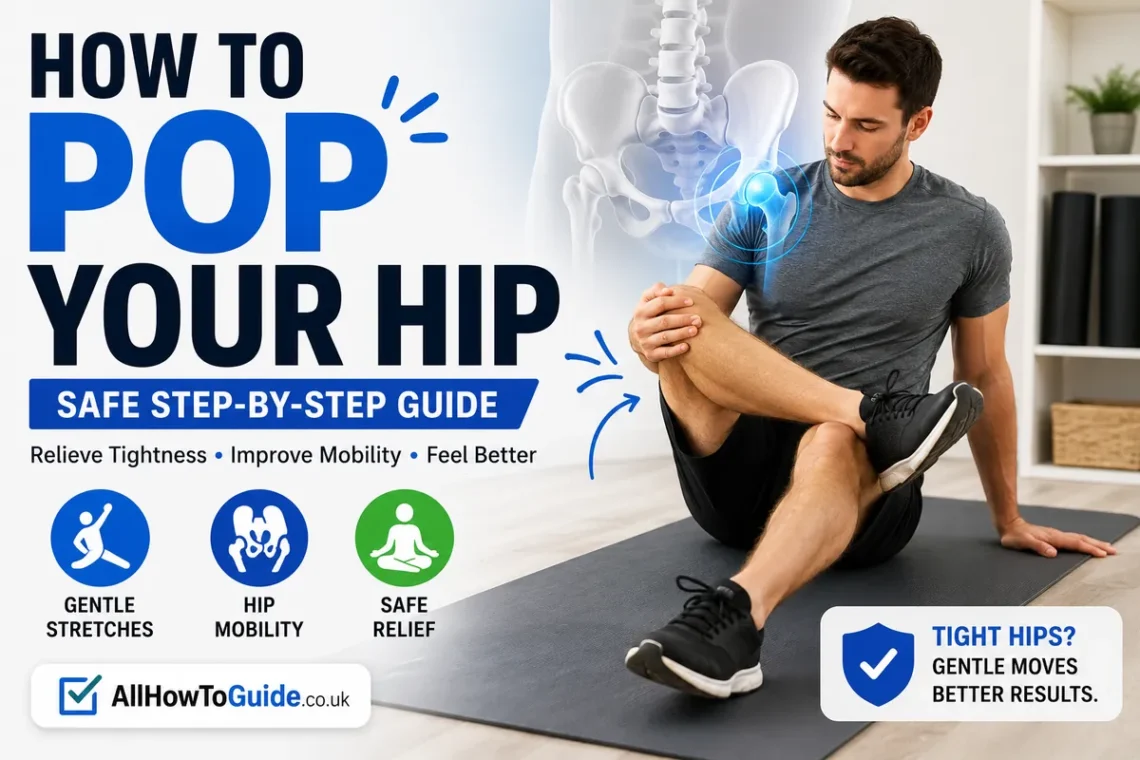
Hip stiffness, tight muscles, or a feeling that your hip needs to “pop” can be uncomfortable. Many people notice a clicking or popping sensation after sitting for long periods, exercising, or stretching. In most cases, this feeling is harmless and simply happens because of muscles, tendons, or gas bubbles moving inside the joint. However, forcing your hip to pop the wrong way can lead to pain or injury.
In this guide, you’ll learn how to pop your hip safely, why hips pop, stretches that may provide relief, when to avoid popping your hip, and when it’s time to seek medical advice.
Why Does Your Hip Feel Like It Needs to Pop?
Your hip is one of the largest and strongest joints in your body. It supports your weight while walking, running, and standing. Sometimes the joint or surrounding muscles become tight, creating pressure that makes you feel like your hip needs to pop.
Common reasons include:
- Tight hip flexor muscles
- Sitting for long hours
- Muscle stiffness after exercise
- Tendons moving over bones
- Gas bubbles inside the joint
- Mild joint stiffness
A painless pop is usually normal. However, popping accompanied by pain, swelling, or instability should not be ignored.
Is It Safe to Pop Your Hip?
For many people, an occasional painless pop happens naturally and isn’t a cause for concern. The important thing is not to force the movement.
If your hip pops during gentle stretching without pain, it’s generally considered harmless. But repeatedly twisting or jerking the joint to create a pop can strain muscles, ligaments, or the joint itself.
If your hip hurts every time it pops, stop trying to make it pop and consult a healthcare professional.
Warm Up Before Stretching
Before attempting any stretches, warm up your muscles for about 5–10 minutes.
Good warm-up activities include:
- Walking
- Light cycling
- Marching in place
- Gentle leg swings
A warm muscle stretches more comfortably than a cold one.
Stretch 1: Knee-to-Chest Stretch
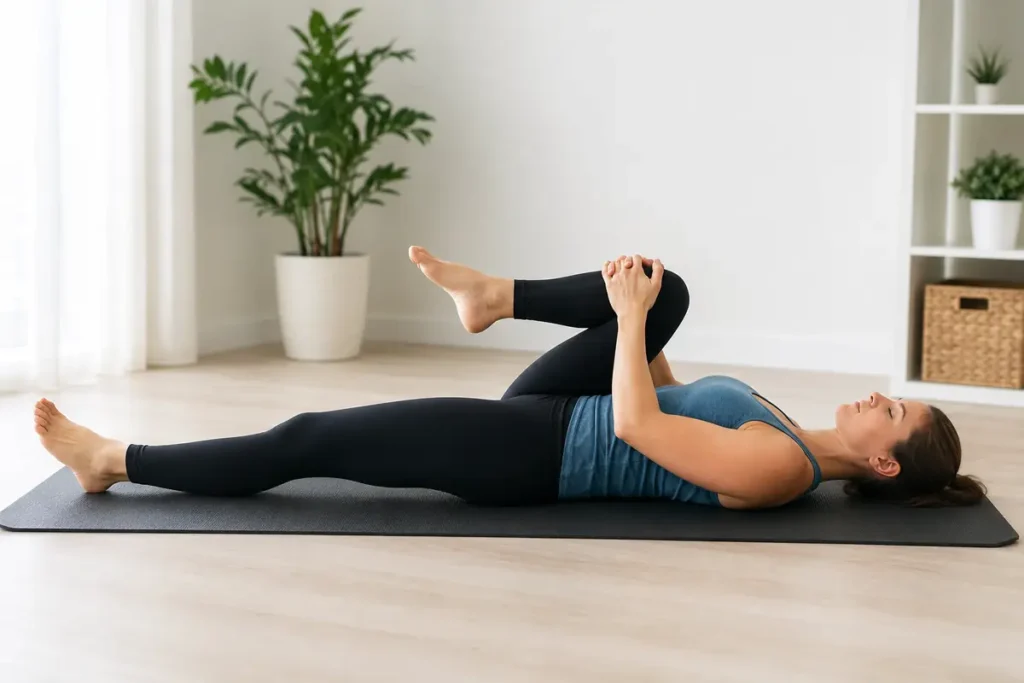
This simple stretch helps loosen the hips and lower back.
Steps
- Lie on your back.
- Keep one leg straight.
- Pull the opposite knee toward your chest.
- Hold for 20–30 seconds.
- Switch legs.
Repeat 2–3 times on each side.
Stretch 2: Figure Four Stretch
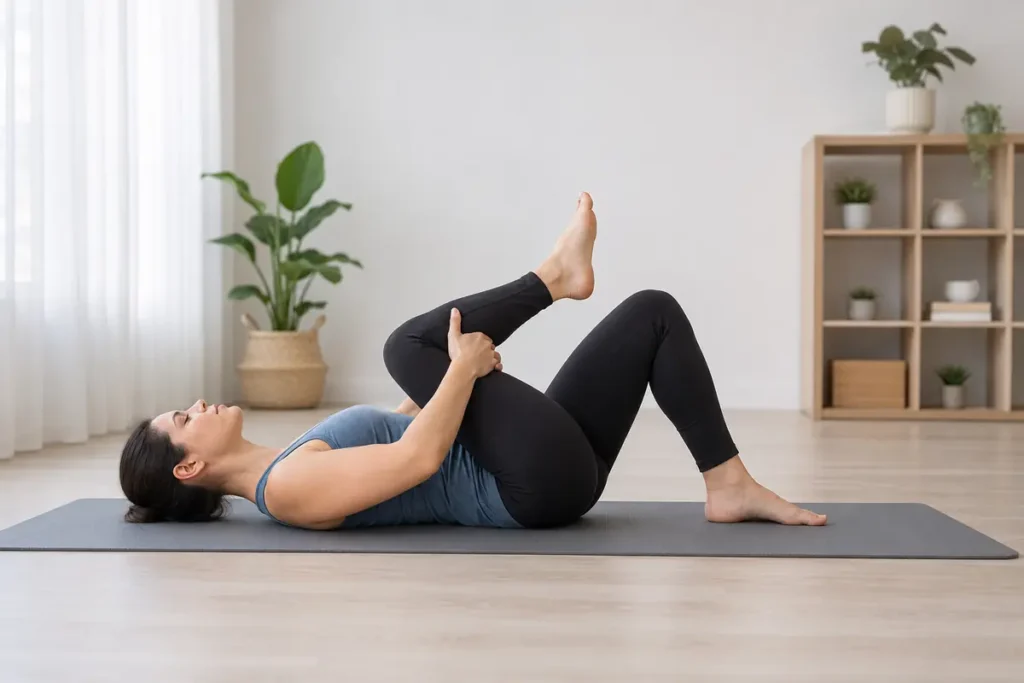
This stretch targets the hip muscles and glutes.
Steps
- Lie on your back.
- Cross one ankle over the opposite knee.
- Pull the supporting leg toward your chest.
- Hold for 30 seconds.
- Repeat on the other side.
Many people notice reduced hip tightness after this stretch.
Stretch 3: Hip Flexor Stretch
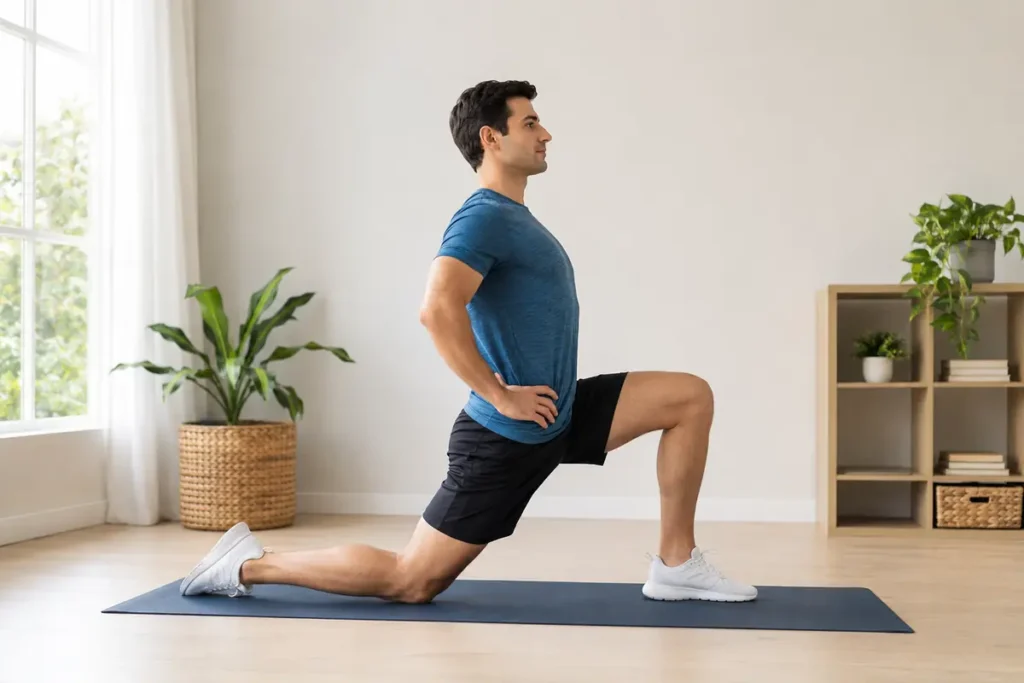
Tight hip flexors are one of the most common causes of hip discomfort.
Steps
- Kneel on one knee.
- Place the opposite foot in front.
- Gently shift your weight forward.
- Keep your back straight.
- Hold for 30 seconds.
Repeat on both sides.
Stretch 4: Seated Hip Rotation
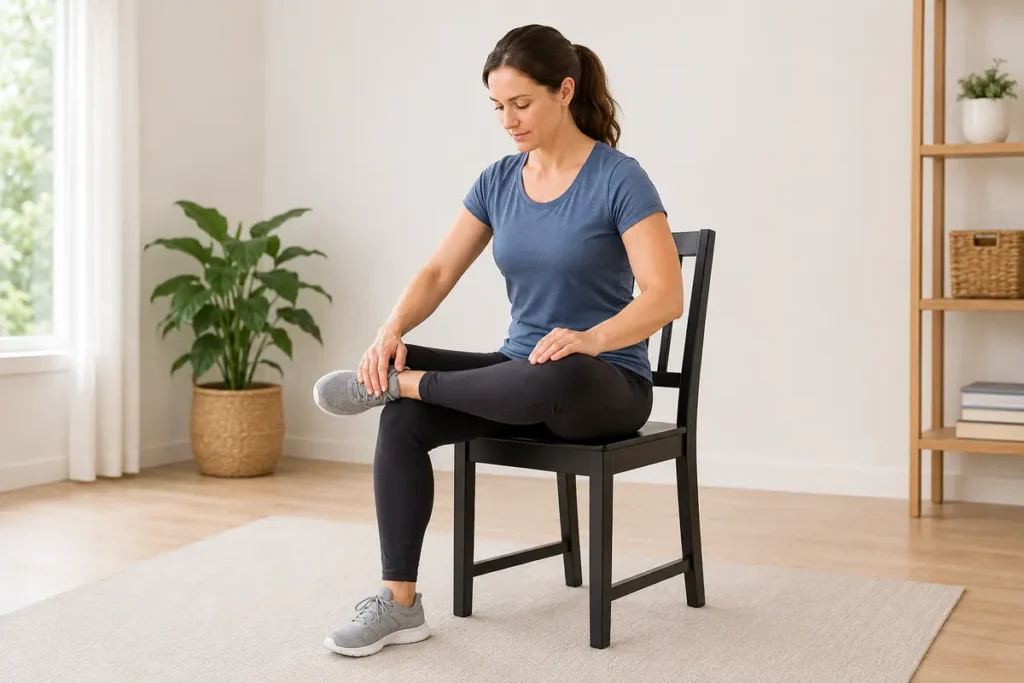
This gentle mobility exercise improves hip movement.
Steps
- Sit upright in a chair.
- Place one ankle over the opposite knee.
- Lean forward slightly.
- Hold for 20–30 seconds.
- Repeat on the other side.
Avoid bouncing during the stretch.
Stretch 5: Child’s Pose
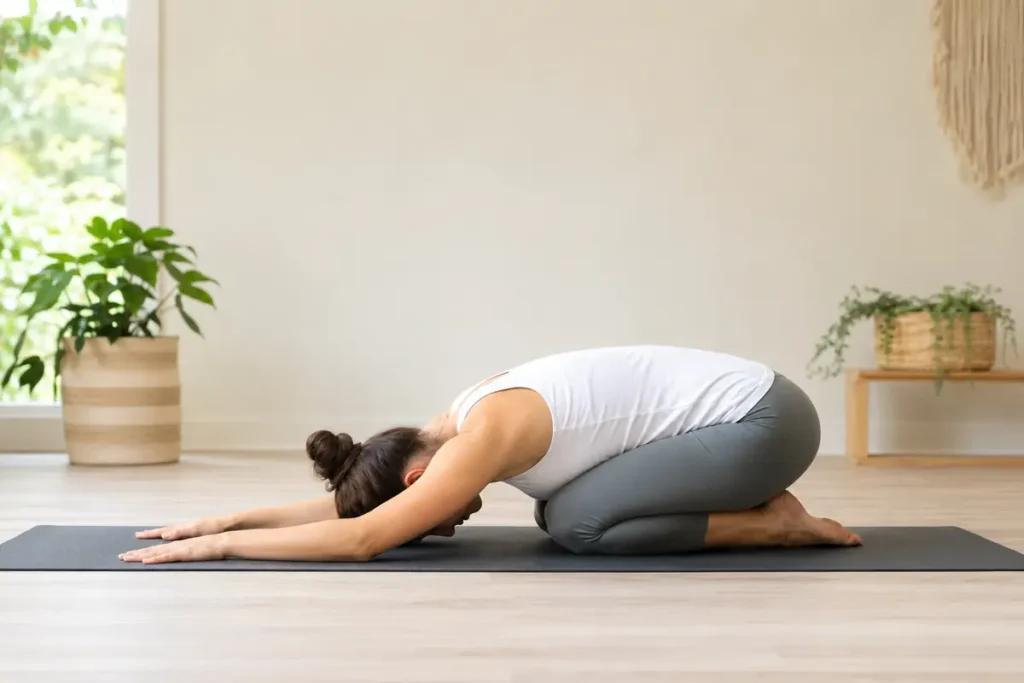
Child’s Pose gently stretches the hips, lower back, and thighs.
Steps
- Kneel on the floor.
- Sit back onto your heels.
- Extend your arms forward.
- Lower your chest toward the floor.
- Hold for 30–60 seconds.
Focus on slow, steady breathing.
Foam Rolling Can Help
If your hips feel tight after exercise, a foam roller may help reduce muscle tension.
Roll slowly over:
- Glutes
- Hip flexors
- IT band area (avoid direct pressure on painful spots)
- Upper thighs
Spend about 30 seconds on each muscle group.
What If Your Hip Pops During Exercise?
A painless pop while walking, stretching, or exercising is often normal.
However, stop exercising if you experience:
- Sharp pain
- Swelling
- Locking of the joint
- Difficulty walking
- Loss of strength
These symptoms may indicate an injury that needs medical evaluation.
Common Causes of Hip Popping
Several conditions can cause hip popping.
These include:
Snapping Hip Syndrome
A tendon moves over a bone, creating a snapping sensation.
Tight Muscles
Hip flexors or glutes may become tight after sitting.
Arthritis
Joint wear can sometimes create clicking sounds.
Labral Tear
Damage to the cartilage around the hip joint may cause painful popping.
Only a healthcare professional can diagnose these conditions accurately.
When Should You Avoid Trying to Pop Your Hip?
Do not attempt to pop your hip if you have:
- Severe pain
- Recent hip injury
- Hip surgery recovery
- Swelling
- Numbness
- Difficulty standing
- Fever with joint pain
These symptoms require medical attention rather than self-treatment.
Tips to Keep Your Hips Healthy
Healthy habits can reduce stiffness and improve mobility.
Consider these simple tips:
- Stretch daily.
- Stay physically active.
- Avoid sitting for long periods.
- Maintain good posture.
- Strengthen your core and glutes.
- Stay hydrated.
- Wear supportive footwear.
Consistency is more effective than forcing your joints to crack.
When to See a Doctor
Occasional painless hip popping is common, but seek medical advice if you notice:
- Persistent pain
- Swelling
- A popping sound after an injury
- Limited range of motion
- Hip instability
- Difficulty walking
Early treatment often prevents more serious problems.
Final Thoughts
Knowing how to pop your hip safely is really about improving flexibility rather than forcing the joint to crack. Gentle stretches, proper warm-ups, and regular movement can often relieve the tightness that causes the sensation. If your hip pops without pain, it’s usually not a problem. However, persistent pain, swelling, or instability should always be evaluated by a healthcare professional. Listening to your body and avoiding forceful movements is the safest approach for maintaining healthy hips.
FAQs
1. Is it bad if my hip pops?
Not necessarily. A painless pop is often normal.
2. Why does my hip pop when I walk?
It may be caused by tendons moving over bones or muscle tightness.
3. Can stretching help relieve hip tightness?
Yes. Gentle stretching often improves flexibility and reduces stiffness.
4. Should I force my hip to pop?
No. Forcefully twisting the joint can increase the risk of injury.
5. When should I see a doctor?
If your hip popping is painful, causes swelling, or affects your ability to walk.