
A cavity rarely appears overnight. It usually starts as a small area of tooth decay that develops slowly over time. In the early stages, you might not notice anything unusual, but as the decay progresses, it can cause pain, sensitivity, and permanent damage if left untreated.
Knowing the warning signs early can help you avoid more serious dental problems and reduce the need for extensive treatment. In this guide, you’ll learn how to know if you have a cavity, the most common symptoms, what causes cavities, how dentists diagnose them, and what you can do to protect your teeth.
What Is a Cavity?
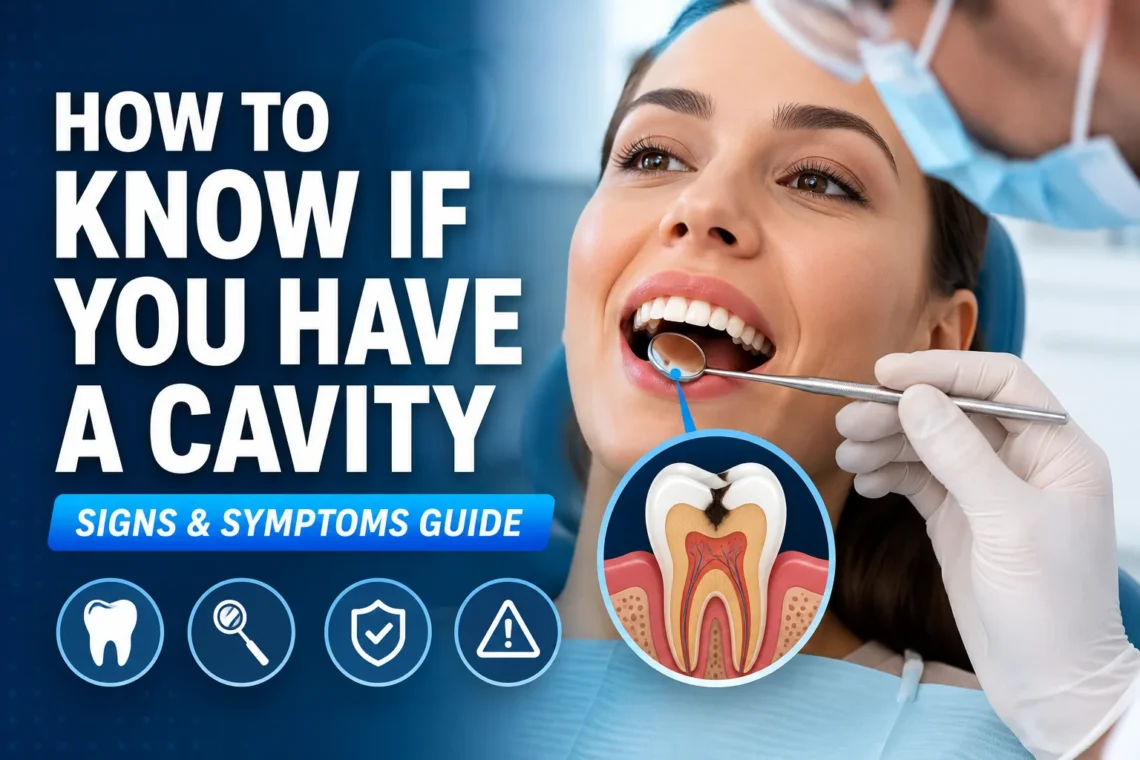
A cavity is a permanently damaged area in the hard surface of a tooth. It forms when bacteria in your mouth feed on sugars and produce acids that gradually wear away tooth enamel.
If the decay continues, it can move deeper into the tooth and affect the dentin and eventually the pulp, where nerves and blood vessels are located.
Without treatment, a cavity can become painful and may lead to infection or even tooth loss.
How Cavities Develop
Cavities usually develop in several stages.
- Plaque builds up on the teeth.
- Bacteria feed on sugars from food and drinks.
- Acid attacks the enamel.
- Small areas of enamel begin to weaken.
- A hole forms in the tooth.
- Decay spreads deeper if untreated.
This process can take months or even years, depending on your oral hygiene and diet.
Early Signs You May Have a Cavity
One of the biggest challenges with cavities is that they often don’t cause pain right away.
Watch for these early warning signs.
Tooth Sensitivity
If your tooth suddenly feels sensitive when eating ice cream, drinking hot coffee, or enjoying sweet foods, it could be an early sign of decay.
Sensitivity usually happens because the protective enamel has started to wear away.
White, Brown, or Black Spots
Healthy teeth are usually consistent in color.
A chalky white spot may indicate early enamel damage.
Brown or black spots can suggest that decay has progressed further.
Rough Areas on a Tooth
Run your tongue gently across your teeth.
If one tooth feels rough or uneven compared to the others, it may have started developing a cavity.
Food Frequently Gets Stuck
If food repeatedly becomes trapped in the same spot, a small cavity may be creating a space where debris collects.
Common Symptoms of a Cavity
As the decay grows, symptoms often become easier to notice.
Toothache
Persistent or occasional tooth pain is one of the most common symptoms.
The discomfort may come and go or become constant.
Pain When Biting
If biting down causes discomfort, the cavity may have reached deeper layers of the tooth.
Sharp Pain with Hot or Cold Foods
Pain that occurs immediately after eating or drinking something hot or cold often suggests exposed dentin.
Sweet Foods Cause Discomfort
Sugar can trigger pain when it reaches areas affected by decay.
Visible Hole in the Tooth
Sometimes you can actually see a small hole or pit in the affected tooth.
This usually means the cavity has progressed beyond the earliest stages.
Bad Breath
Persistent bad breath that doesn’t improve with brushing may be linked to bacteria collecting inside a cavity.
Can You Have a Cavity Without Pain?
Yes.
Many cavities cause no pain until they become fairly large.
In fact, some people only discover a cavity during a routine dental examination or X-ray.
That’s one reason regular dental checkups are so important—even if your teeth feel perfectly fine.
Where Cavities Usually Form
Certain parts of your mouth are more likely to develop cavities.
These include:
- Between teeth
- Back molars
- Along the gumline
- Deep grooves on chewing surfaces
- Around old dental fillings
These areas are harder to clean and can trap food more easily.
What Causes Cavities?
Several factors increase your risk.
Poor Brushing Habits
Plaque builds up quickly when teeth aren’t cleaned properly.
Frequent Sugary Foods
Candy, soda, cookies, and sweet drinks provide fuel for cavity-causing bacteria.
Dry Mouth
Saliva helps wash away bacteria and neutralize acids.
A dry mouth increases the chance of tooth decay.
Frequent Snacking
Constant snacking exposes your teeth to acid attacks throughout the day.
Poor Oral Hygiene
Skipping flossing allows plaque to remain between teeth where cavities commonly begin.
How Dentists Diagnose a Cavity
Dentists use several methods to identify cavities.
These may include:
- Visual examination
- Dental probe
- Dental X-rays
- Special cavity-detection lights
- Bitewing radiographs
Some cavities—especially those between teeth—can only be seen with X-rays.
What Happens If You Ignore a Cavity?
Ignoring a cavity usually makes the problem worse.
The decay may eventually:
- Reach the tooth nerve
- Cause severe pain
- Lead to infection
- Create a dental abscess
- Require a root canal
- Require tooth extraction
Treating cavities early is usually simpler, faster, and less expensive.
Can a Cavity Heal on Its Own?
A true cavity cannot repair itself.
However, very early enamel damage (before a hole forms) may sometimes be slowed or remineralized with:
- Fluoride toothpaste
- Fluoride treatments
- Good oral hygiene
- Reduced sugar intake
Once a hole develops, professional treatment is necessary.
How Cavities Are Treated
Treatment depends on how advanced the decay is.
Fluoride Treatment
Very early enamel damage may improve with fluoride.
Dental Filling
Most cavities are treated by removing the decay and filling the tooth.
Crown
Large cavities may require a dental crown to restore strength.
Root Canal
If decay reaches the pulp, a root canal may be necessary.
Tooth Extraction
When a tooth is severely damaged and cannot be saved, extraction may be the only option.
How to Prevent Cavities
Good daily habits make a significant difference.
Brush Twice Daily
Use fluoride toothpaste and brush for at least two minutes.
Floss Every Day
Floss removes plaque where your toothbrush can’t reach.
Limit Sugary Foods
Reducing sugar lowers acid production in your mouth.
Drink More Water
Water helps rinse away food particles and bacteria.
Visit Your Dentist Regularly
Routine dental checkups help detect cavities before they become serious.
Good health isn’t just about your teeth. If you’re also supporting a loved one through illness or recovery, our guide on How to Comfort Someone offers practical advice.
When You Should See a Dentist
Schedule a dental appointment if you notice:
- Ongoing tooth pain
- Sensitivity lasting several days
- A visible hole
- Swelling around a tooth
- Persistent bad breath
- Pain while chewing
Prompt treatment can prevent further damage and preserve your natural tooth.
Final Thoughts
Learning how to know if you have a cavity can help you recognize dental problems before they become more serious. Early signs such as sensitivity, discoloration, or mild discomfort shouldn’t be ignored. While some cavities develop without noticeable pain, regular dental checkups and good oral hygiene remain the best ways to catch problems early. If you suspect you have a cavity, seeing a dentist promptly can help protect your teeth and prevent more extensive treatment later.
Maintaining good overall health includes healthy daily habits. You may also enjoy our beginner’s guide on How to Eat Crawfish for tips on eating seafood safely and correctly.
FAQs
1. Can a cavity go away without treatment?
No. Once a cavity forms, it requires professional dental treatment.
2. Do cavities always hurt?
No. Many cavities cause no pain during the early stages.
3. Can I see a cavity myself?
Sometimes. Large cavities may appear as dark spots or small holes, but many are hidden between teeth.
4. How long does it take for a cavity to form?
It varies. Cavities may take months or even years to develop, depending on oral hygiene, diet, and other factors.
5. Is tooth sensitivity always a cavity?
Not always. Sensitivity can have several causes, including worn enamel, gum recession, or cracked teeth, so a dental examination is the best way to determine the cause.
📚 Related Guides
Looking for more helpful health and wellness guides? Explore these step-by-step tutorials: