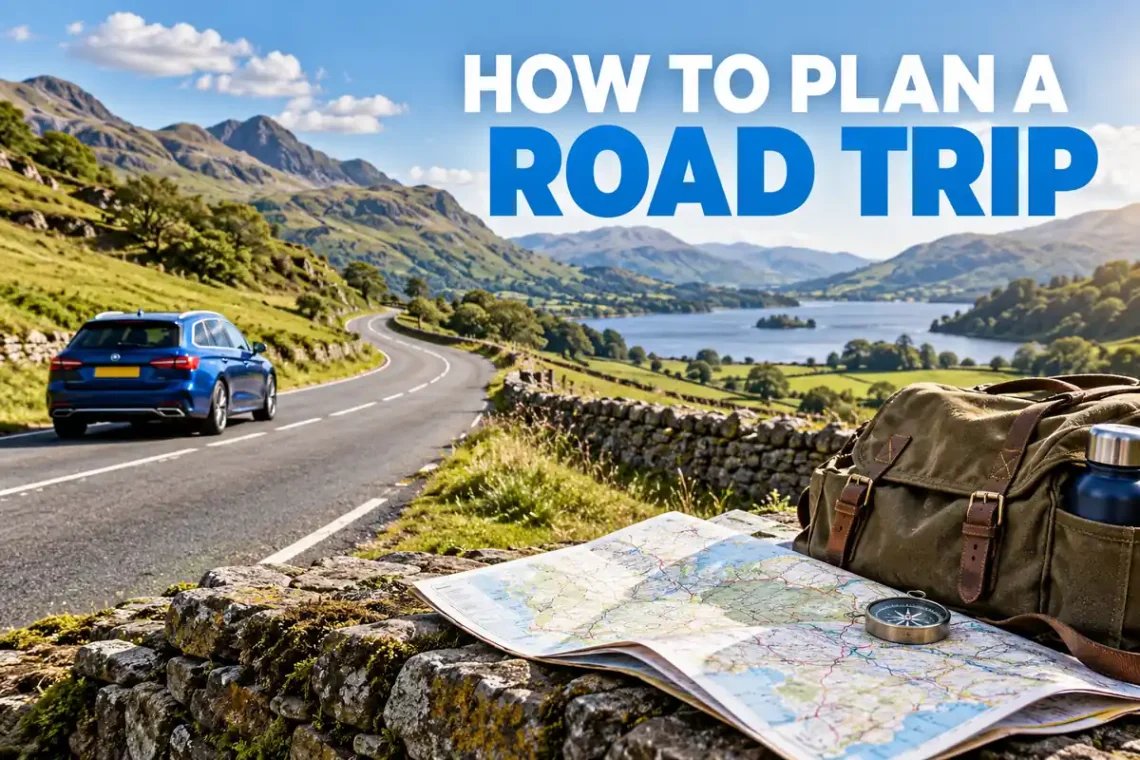
A road trip gives you the freedom to stop at a seaside town, take a scenic detour or spend an extra morning somewhere you love. However, the journey becomes less enjoyable when you underestimate driving time, forget an essential document or discover that your overnight stop has nowhere suitable to park.
Learning how to plan a road trip starts with a few practical decisions: where you want to go, how much time you have and what you can afford. This guide walks through each stage, from choosing a manageable route to packing your car, with useful considerations for UK journeys and trips abroad.
1. Choose Your Destination and Travel Dates
Start by deciding what you want from the trip. A weekend exploring villages needs a different plan from a week visiting several cities. Choosing a clear purpose helps you narrow down destinations without filling the itinerary with unrelated stops.
Ask yourself:
- How many days do I have, including the journey home?
- Who is travelling, and what do they want to do?
- Would I prefer countryside, coast, cities or a mixture?
- Do I want to stay in one place or change accommodation?
- Are my dates fixed or flexible?
Next, check whether your main attractions open on your intended dates. Look at their official websites for opening times, booking requirements and seasonal closures.
For a short break, consider exploring one region. You can spend more time enjoying each stop when you do not have to cross a large area between attractions.
2. Map Out a Route That Makes Sense
Once you have a destination, plot your starting point, main stops and finishing point on a map. Look at where everything sits before deciding the order.

Group nearby attractions together and remove unnecessary backtracking. Then choose between a circular route, an out-and-back journey or a one-way trip.
| Route type | When to consider it | What to check |
|---|---|---|
| Circular route | You want to finish where you started | Whether stops form a practical loop |
| Out-and-back | You have one main destination | Whether the return journey needs an overnight stop |
| One-way route | You want to finish somewhere different | Return transport and any car-hire drop-off charges |
Compare the roads as well as the estimated journey times. Consider whether you are comfortable with narrow lanes, unfamiliar city centres or remote stretches.
Before finalising the route, check roadworks and closures. The AA recommends checking route conditions and planning stops before departure.
3. Build a Realistic Road Trip Budget
Set an overall spending limit before booking accommodation. Then divide it into transport, overnight stays, food and activities.
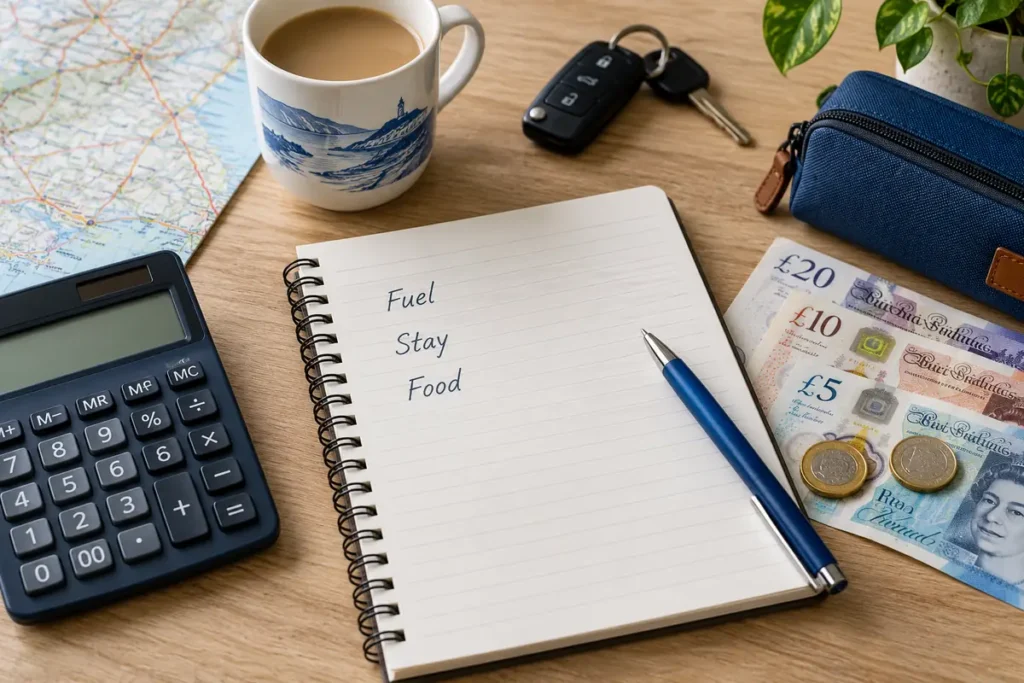
Remember to include smaller costs such as parking, tolls, ferry crossings and campsite facilities. If you are hiring a car, check the full booking terms, including mileage allowances, fuel policy and additional-driver charges.
Use this simple planning table:
| Expense | How to estimate it |
|---|---|
| Fuel or charging | Planned distance, vehicle consumption and expected prices |
| Accommodation | Total price for all nights, including parking and fees |
| Food | Daily allowance multiplied by travellers and days |
| Attractions | Admission prices for your chosen activities |
| Transport extras | Tolls, ferries, parking and applicable local charges |
| Contingency | A separate amount for changes or unexpected expenses |
For a petrol or diesel car with consumption measured in litres per 100 kilometres:
Estimated fuel cost = distance in kilometres ÷ 100 × litres per 100 kilometres × price per litre.
Use your vehicle’s recent consumption where possible, and include local driving at your destination. Treat the result as an estimate because actual consumption and prices can vary.
4. Plan Driving Days Around Breaks
A map’s driving estimate is only part of your day. Lunch, toilet stops, sightseeing, parking and check-in all need time.

Build each travel day in this order:
- Note the estimated driving time.
- Add planned rest breaks.
- Allow time for meals and activities.
- Leave some room for delays.
- Check whether the arrival time still feels manageable.
The Highway Code recommends a break of at least 15 minutes after every two hours of driving. It also advises against starting a journey when tired. If you become sleepy, stop somewhere safe rather than waiting for your next planned break.
Avoid treating a particular daily mileage as a target you must reach. Choose an overnight stop that suits the driver, road conditions and passengers.
5. Book Accommodation Around Your Itinerary
Choose accommodation after you have a workable route. Otherwise, a booking that looks attractive on its own might leave you with an awkward drive at the end of the day.
Before reserving a room or campsite, check:
- Parking availability, charges and vehicle restrictions.
- Check-in times and arrangements for late arrivals.
- Cancellation and date-change terms.
- Distance from your planned activities.
- Accessibility, family or pet requirements.
- Charging access if you are bringing an electric car.
Compare the total cost, including any parking or breakfast you expect to need.
Book the nights that anchor your journey first, such as a stay before a ferry departure or near a timed activity. If you want flexibility elsewhere, identify suitable alternatives rather than relying on finding somewhere at the last moment.
6. Check Your Car Before Departure
Give yourself time to address vehicle problems before travel day. A warning light or damaged tyre is easier to deal with before you have a packed car and a fixed arrival deadline.
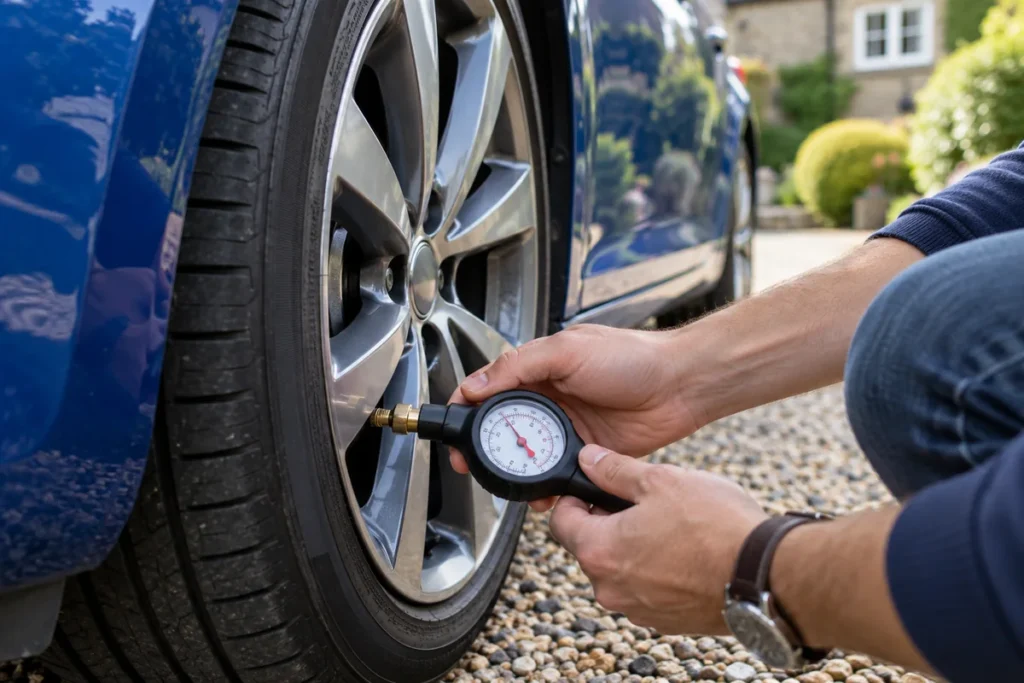
The AA’s pre-trip checks cover tyres, lights, oil, coolant, electrics and fuel or charge. Use your vehicle handbook for the correct procedures and specifications.
Your preparation should include checking:
- Tyre condition and the recommended pressures for your load.
- Lights, indicators, wipers and screenwash.
- Relevant fluid levels, following the handbook.
- Fuel level or battery charge.
- Any warning lights or unresolved mechanical concerns.
- The spare wheel or tyre-repair equipment supplied with the vehicle.
Arrange professional attention if something appears wrong or you are unsure how to check it.
For an electric car, identify charging stops and alternatives along the route. Check connector compatibility, access arrangements and payment methods with the charging operators before relying on a location.
7. Prepare Documents and Check Local Requirements
Keep your driving licence, insurance information, booking confirmations and breakdown contact details accessible. Check that anyone sharing the driving has suitable permission and insurance cover.
If you are travelling abroad, review the requirements for every country on your route, including those you only pass through. GOV.UK advises checking driving documents, insurance and any additional equipment needed. Depending on your destination and licence, you may need an international driving permit.
When taking your own UK vehicle abroad for less than 12 months, take its V5C log book. For a UK-hired or leased vehicle, GOV.UK says you need a VE103 certificate showing that you are allowed to use it abroad.
Check your insurance cover directly with your insurer, too. Do not assume that the cover you have at home applies in exactly the same way overseas.
8. Save Maps and Important Information Offline
Prepare your navigation before departure, particularly when travelling through unfamiliar areas.
Download the map areas you need while you have an internet connection. Make sure they cover the entire journey, including overnight stops and possible detours.
Google Maps supports offline driving navigation when the whole route lies within the downloaded area. However, offline navigation does not provide traffic information or alternative routes, and downloads are unavailable in some regions.
Also save:
- Accommodation addresses and contact numbers.
- Booking references and check-in instructions.
- Parking locations.
- Breakdown assistance details.
- A simple copy of your daily itinerary.
Set your destination before moving off. If plans change, ask a passenger to help or stop safely before adjusting navigation.
9. Pack for the Journey and the Destination
Think about what you will need during the drive separately from what you will use after arrival.
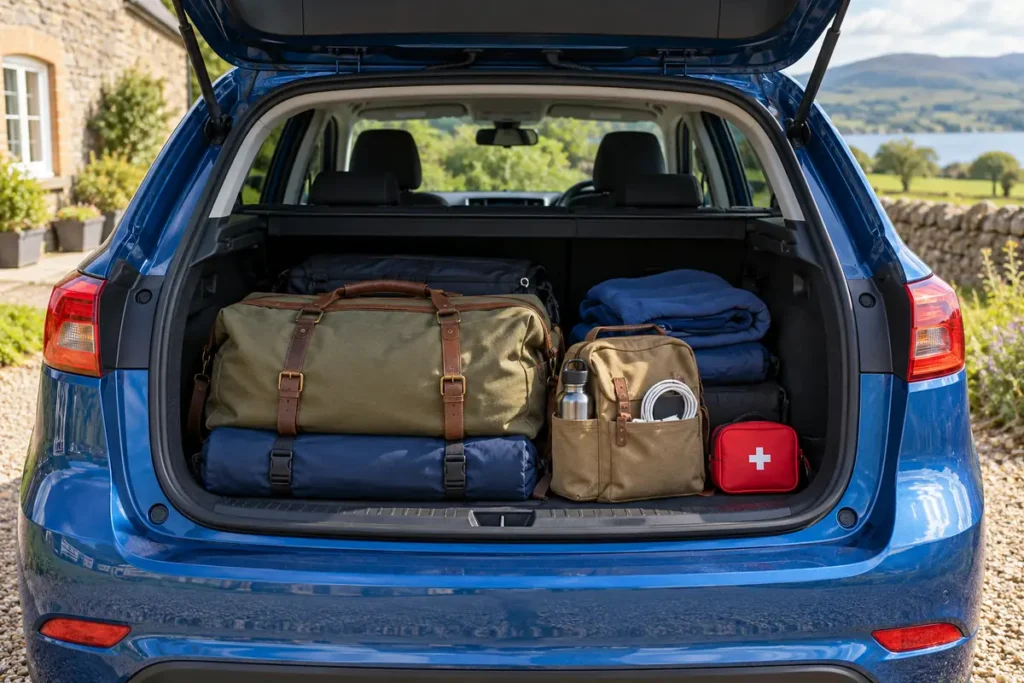
Keep a small, accessible bag for water, snacks, necessary medication, charging cables and weather-appropriate layers. This avoids unpacking the boot whenever someone needs something.
For the rest of your luggage, use a checklist based on your activities. Walking, beach visits, camping and city breaks each call for different items.
Include practical supplies such as a torch, first-aid kit and any equipment required for your destination. Secure luggage so it cannot shift around, and keep the driver’s view clear. The AA also recommends carrying water, charging equipment and warm clothing for unexpected delays.
If travelling with children, prepare suitable activities and allow for additional stops. Discuss comfort and accessibility needs with everyone before finalising the schedule.
10. Leave Room for Changes
A useful itinerary tells you where you expect to sleep and what matters most each day. It does not need to assign an activity to every hour.
Separate your plans into three groups:
- Fixed commitments: accommodation, ferry departures and timed tickets.
- Main priorities: the places you most want to visit.
- Optional stops: activities you can skip without disrupting the trip.
Check weather forecasts and route conditions shortly before leaving, then review the next day’s journey each evening.
If a delay develops, remove an optional stop before it creates pressure to rush. Share your general route and expected arrival with someone you trust, especially when travelling alone.
A Simple Road Trip Itinerary Template
Use one row per day to check whether your plan is practical. Fill in driving times from your chosen route and add breaks separately.
| Day | Starting point | Main activity | Driving and breaks | Overnight stop |
|---|---|---|---|---|
| Day 1 | Home | Travel and one optional visit | Add route estimate and rest stops | First accommodation |
| Day 2 | First accommodation | Explore the surrounding area | Allow for local journeys | Same or next accommodation |
| Day 3 | Overnight base | One priority stop and return | Include breaks and delay allowance | Home |
This is a planning framework, not a fixed schedule. Add more days or remove activities until the journey fits comfortably.
Common Road Trip Planning Mistakes
Before booking everything, look for these problems:
- Too many destinations: remove stops that make the route feel rushed.
- Ignoring the return journey: give the drive home its own plan and budget.
- Counting only driving time: include meals, parking and rest breaks.
- Overlooking parking: check arrangements at accommodation and attractions.
- Depending on one charging stop: identify an alternative before setting off.
- Booking every hour: leave room for delays and changes of interest.
A shorter itinerary that you can comfortably enjoy is often more useful than a long list you struggle to complete.
Final Thoughts
Knowing how to plan a road trip comes down to matching your route with your time, budget and travel preferences. Choose a manageable area, prepare your vehicle and documents, and build proper breaks into each driving day. Once the essential arrangements are in place, leave enough flexibility to enjoy the places you find along the way.
FAQs
What is the first step in planning a road trip?
Decide how many days you have and what kind of trip you want. Then choose a destination that fits your available time and budget.
How far in advance should you plan a road trip?
Start once you know your dates. Check accommodation and transport availability early, especially when your journey depends on specific bookings.
How often should you stop during a road trip?
The Highway Code recommends at least a 15-minute break after every two hours of driving. Stop sooner if you feel tired.
How can you plan a road trip on a budget?
Keep the route compact, estimate all major costs, compare accommodation totals and choose activities that fit your spending limit.
Can you take a road trip without booking accommodation?
You can leave nights flexible, but availability is not guaranteed. Check suitable alternatives and decide where you will stop before you become tired.