
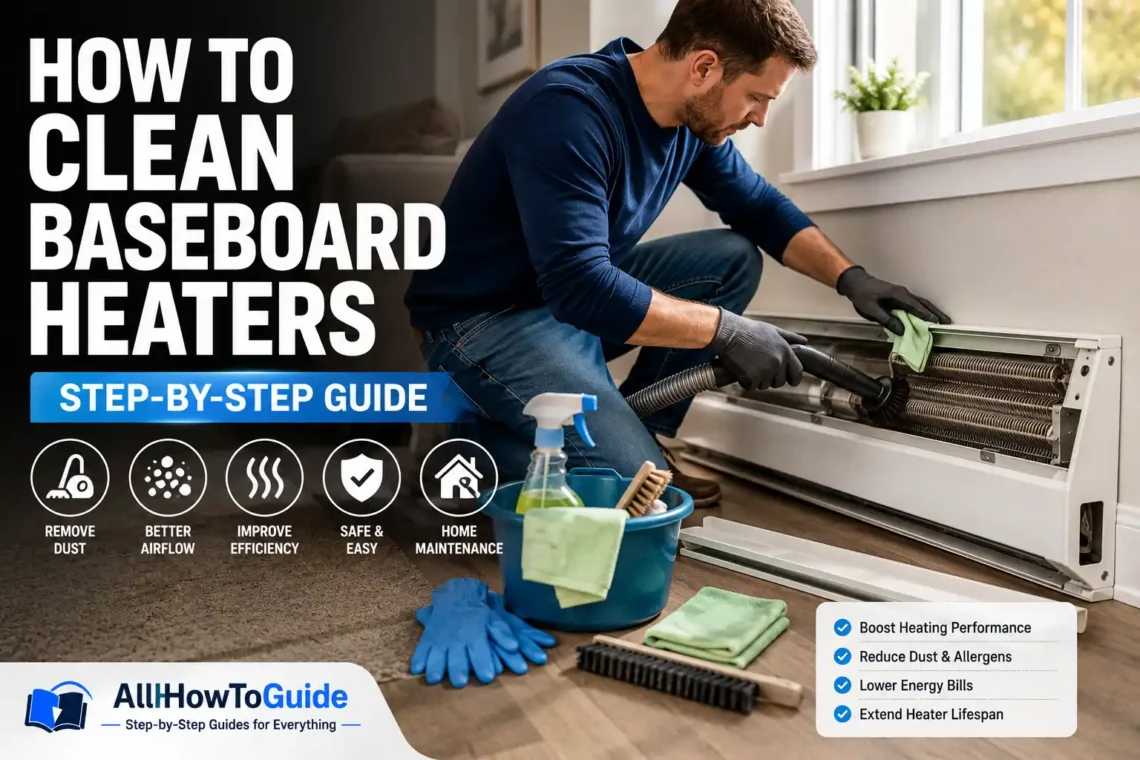
Baseboard heaters quietly keep your home warm during colder months, but they’re also magnets for dust, pet hair, and debris. Over time, this buildup can reduce heating efficiency, create unpleasant burning smells, and even shorten the life of the heater. Fortunately, cleaning them is a simple home maintenance task that most homeowners can do themselves.
Learning how to clean baseboard heaters helps improve airflow, keeps your heating system working efficiently, and can even lower energy costs. Whether you have electric or hydronic baseboard heaters, regular cleaning only takes a few minutes and can make a noticeable difference.
This guide walks you through the safest and most effective way to clean baseboard heaters, what tools you’ll need, and common mistakes to avoid.
Why Should You Clean Baseboard Heaters?
Dust naturally settles inside baseboard heaters throughout the year. When you turn the heat on for the first time during winter, that dust often burns, producing a noticeable smell.
Regular cleaning helps:
- Improve heating performance
- Reduce burning odors
- Lower dust circulation
- Improve indoor air quality
- Increase heater lifespan
- Prevent overheating
Most manufacturers recommend cleaning heaters at least twice a year.
Keeping your home appliances properly maintained can improve efficiency and reduce long-term costs. If you enjoy practical step-by-step tutorials, you may also like our guide on How to Force Quit on Mac.
What You’ll Need
Gather these supplies before you begin:
- Vacuum cleaner with brush attachment
- Microfiber cloth
- Soft paintbrush or cleaning brush
- Mild dish soap
- Warm water
- Screwdriver (if the cover needs removal)
- Protective gloves
- Dust mask (optional)
Avoid abrasive cleaners or steel brushes that could damage the heater.
If you’re working with measurements or school assignments, our tutorial on How to Calculate Percent Error explains the formula with easy examples.
Turn Off the Heater First
Safety always comes first.
For electric baseboard heaters:
- Turn the thermostat off.
- Switch off power at the circuit breaker.
- Allow the heater to cool completely.
For hydronic heaters:
- Turn the thermostat down.
- Wait until the unit is cool before cleaning.
Never clean a heater while it’s hot.
Remove Loose Dust
Start by vacuuming the outside of the heater.
Use the brush attachment to clean:
- Front panel
- Air vents
- Top openings
- Bottom edges
This removes the majority of loose dust without spreading it around the room.
Remove the Heater Cover (If Possible)
Many baseboard heaters have removable front covers.
If yours does:
- Carefully lift or unscrew the cover.
- Set it aside safely.
This gives you access to the fins and internal components where dust usually collects.
If your model doesn’t have a removable cover, don’t force it.
Vacuum the Inside
Use the vacuum’s narrow nozzle to remove dirt from inside the heater.
Pay special attention to:
- Heating fins
- Corners
- Bottom channel
- Air passages
Move slowly to avoid bending the metal fins.
Brush Away Stubborn Dust
Some debris sticks between the fins.
Use a soft paintbrush to gently loosen:
- Pet hair
- Dust clumps
- Cobwebs
Brush downward while vacuuming to capture loosened debris immediately.
Avoid using excessive force.
Wipe the Exterior
Mix a few drops of mild dish soap with warm water.
Lightly dampen a microfiber cloth.
Wipe:
- Front panel
- Top surface
- End caps
- Thermostat area
Do not allow water to enter the heater.
Finish by drying all surfaces with a clean cloth.
Inspect the Heater
Before replacing the cover, inspect the heater for:
- Bent fins
- Loose covers
- Rust
- Burn marks
- Damaged wiring (electric models)
If you notice electrical damage, stop using the heater and contact a qualified technician.
Replace the Cover
Once everything is clean and dry:
- Reattach the front panel.
- Tighten any screws.
- Ensure the cover sits securely.
A loose cover may create rattling noises during operation.
Restore Power
Turn the breaker back on (for electric heaters).
Set the thermostat to your desired temperature.
The heater should operate normally without excessive dust or burning smells.
A slight odor after cleaning is normal if a small amount of dust remains.
How Often Should You Clean Baseboard Heaters?
For most homes:
- Before winter begins
- After winter ends
If you have:
- Pets
- Allergies
- Heavy dust
- Ongoing construction
Clean every two to three months.
Need help organizing numbers or household budgets? Check out How to Sum a Column in Excel.
Common Mistakes to Avoid
Avoid these common cleaning errors:
Cleaning While the Heater Is Hot
Always allow the unit to cool completely.
Using Too Much Water
Excess moisture can damage electrical components.
Always use a lightly damp cloth.
Bending the Heating Fins
The fins are delicate.
Use gentle brushes instead of hard tools.
Forgetting to Turn Off Power
Never clean electric heaters while electricity is still flowing.
Blocking Airflow
Avoid placing furniture directly against baseboard heaters after cleaning.
Proper airflow improves heating performance.
Tips for Keeping Baseboard Heaters Cleaner
You can reduce future dust buildup by:
- Vacuuming nearby floors regularly.
- Dusting baseboards weekly.
- Keeping pet hair under control.
- Changing HVAC filters (if applicable).
- Avoiding clutter around heaters.
Preventive cleaning makes deep cleaning much easier.
When Should You Call a Professional?
Routine cleaning is a DIY job, but professional help is recommended if:
- The heater won’t turn on.
- You notice sparks.
- There’s a burning electrical smell.
- Wiring appears damaged.
- The heater makes unusual noises.
- Water is leaking from a hydronic unit.
Electrical repairs should always be handled by qualified professionals.
Final Thoughts
Knowing how to clean baseboard heaters is one of the easiest ways to improve your home’s heating efficiency and indoor air quality. By removing dust, pet hair, and debris a few times each year, you help your heaters work more effectively while reducing odors and extending their lifespan. With just a few simple tools and a little time, your baseboard heaters can stay clean, safe, and ready to keep your home comfortable all winter long.
Managing your online privacy too? Follow our simple tutorial on How to Deactivate Facebook Account.
FAQs
1. How often should I clean baseboard heaters?
At least twice a year, preferably before and after the heating season.
2. Can I vacuum inside a baseboard heater?
Yes. A vacuum with a brush attachment is one of the safest cleaning tools.
3. Is it safe to use water on baseboard heaters?
Only on the exterior with a lightly damp microfiber cloth after the heater is turned off.
4. Why do baseboard heaters smell when first turned on?
Dust accumulated inside the heater burns off when it heats up.
5. Can dirty baseboard heaters increase energy bills?
Yes. Dust buildup restricts airflow and can reduce heating efficiency.
🏠 Related Home & DIY Guides
Looking for more helpful home maintenance and DIY tutorials? Continue with these step-by-step guides: