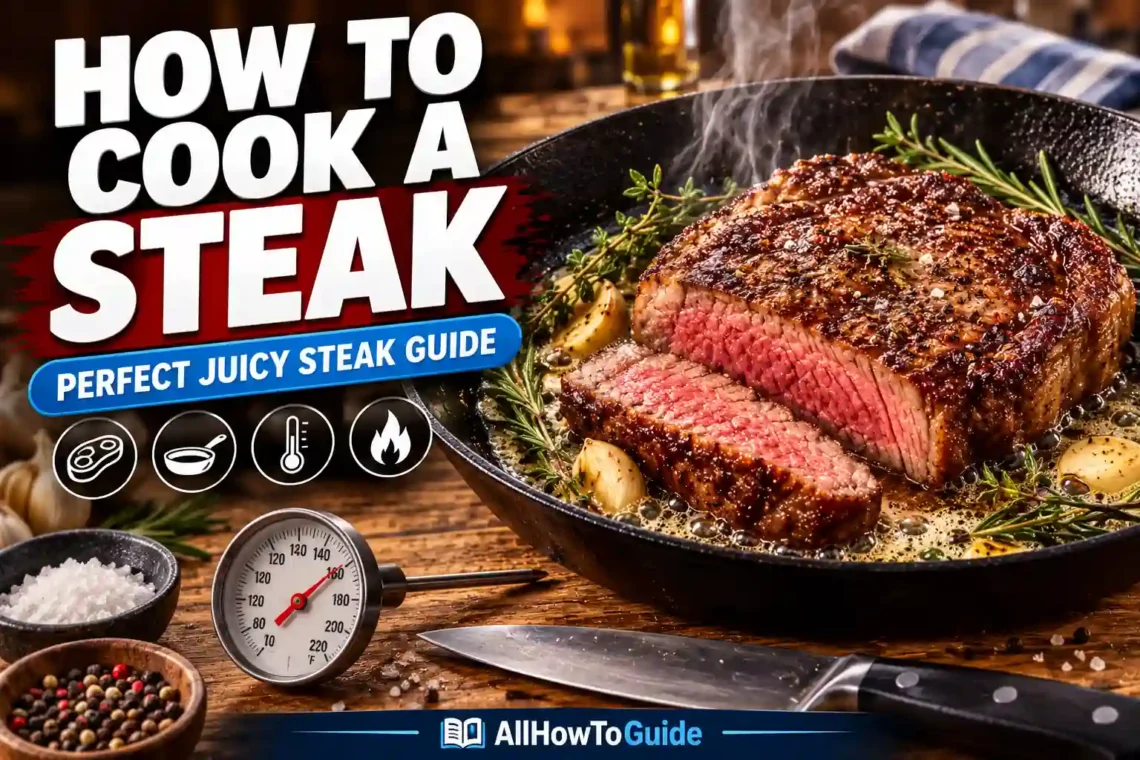
Cooking a steak at home can seem intimidating, especially if you’re worried about overcooking an expensive cut of meat. The good news is that making a juicy, flavorful steak doesn’t require a professional kitchen. With the right cut, proper seasoning, and a few simple techniques, anyone can prepare restaurant-quality steak at home.
If you’ve been searching for how to cook a steak, this guide walks you through everything you need to know—from choosing the best cut to checking doneness and serving your steak like a pro.
Why Cooking Steak Properly Matters
A well-cooked steak delivers the perfect balance of a crisp, caramelized crust and a tender, juicy center. Proper cooking also preserves the meat’s natural flavor and texture, making every bite more enjoyable.
Whether you’re preparing dinner for your family or hosting guests, learning the basics will help you cook with confidence.
Choose the Right Cut of Steak
The first step toward a delicious steak is selecting a quality cut.
Some of the most popular options include:
Ribeye
Rich in marbling, ribeye is one of the juiciest and most flavorful steaks.
New York Strip
A great balance of tenderness and bold beef flavor.
Filet Mignon
Extremely tender with a mild flavor.
Sirloin
A budget-friendly option that’s lean but still flavorful.
T-Bone and Porterhouse
These cuts combine tenderloin and strip steak in one piece, offering two textures in a single steak.
Whenever possible, choose steaks that are about 1 to 1½ inches thick, as they cook more evenly.
If you’re planning a full homemade meal, perfectly cooked chicken wings also make a fantastic option for family dinners. Check out our guide on How Long to Bake Chicken Wings at 400 for crispy, oven-baked results.
Ingredients You’ll Need
Cooking steak doesn’t require a long ingredient list.
You’ll need:
- 1 steak (Ribeye, Strip, Sirloin, or Filet)
- Salt
- Freshly ground black pepper
- 1 tablespoon high smoke point oil (avocado, vegetable, or canola oil)
- 2 tablespoons butter
- 2–3 garlic cloves (optional)
- Fresh rosemary or thyme (optional)
Let the Steak Reach Room Temperature
Before cooking, remove the steak from the refrigerator about 30 to 45 minutes beforehand.
This helps it cook more evenly from edge to center.
Pat the steak dry using paper towels. Removing excess moisture allows a better crust to form.
Season the Steak Properly
Generously season both sides with:
- Kosher salt
- Freshly ground black pepper
Simple seasoning lets the natural beef flavor shine.
Avoid adding marinades unless you’re working with tougher cuts that benefit from additional tenderizing.
The Best Equipment for Cooking Steak
Although several cooking methods work well, the following tools make the process easier:
- Cast iron skillet
- Heavy stainless-steel pan
- Tongs
- Meat thermometer
- Spoon for basting
A cast iron skillet produces an excellent sear because it retains heat extremely well.
Cooking on a flat-top grill instead of a skillet? Our guide on How to Season a Blackstone Griddle explains how to prepare the cooking surface for the best flavor and long-lasting performance.
How to Cook a Steak on the Stovetop
Pan-searing is one of the easiest ways to cook steak.
Step 1: Heat the Pan
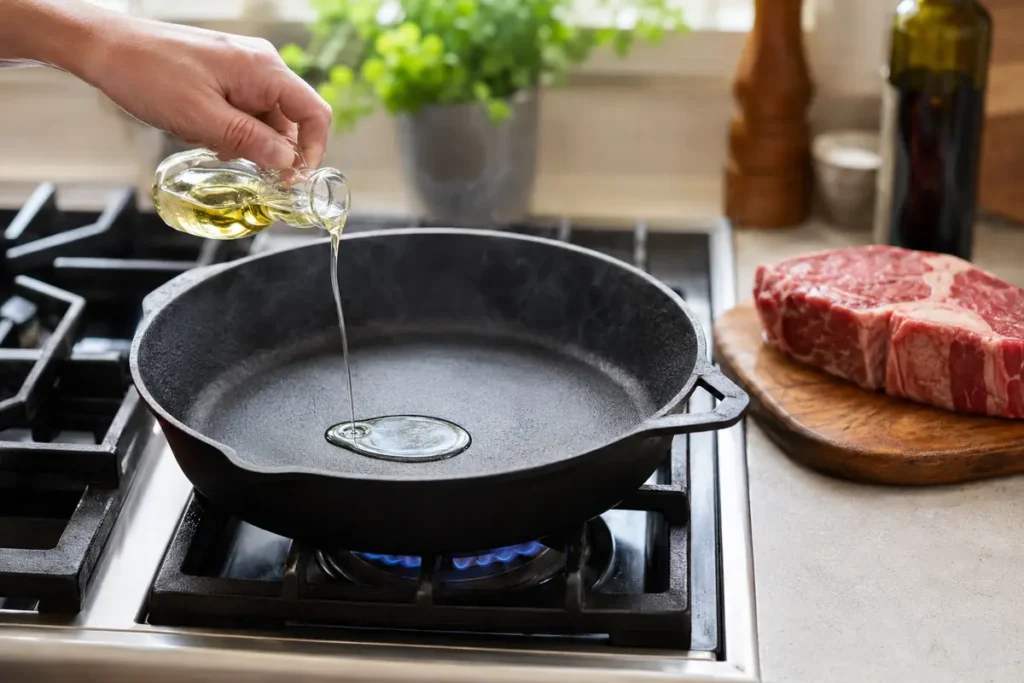
Place your skillet over medium-high to high heat until it’s very hot.
Add the cooking oil.
Step 2: Sear the Steak
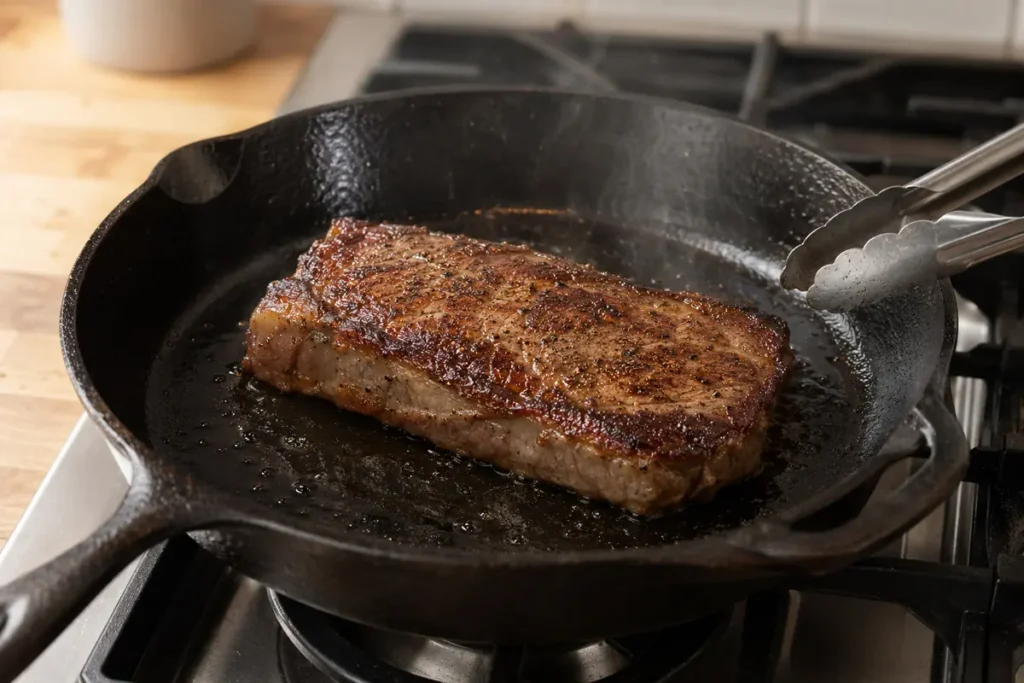
Place the steak in the pan.
Avoid moving it immediately.
Cook for:
- 2–4 minutes on the first side
- Flip once
- Cook another 2–4 minutes
A golden-brown crust should develop.
Step 3: Add Butter and Herbs
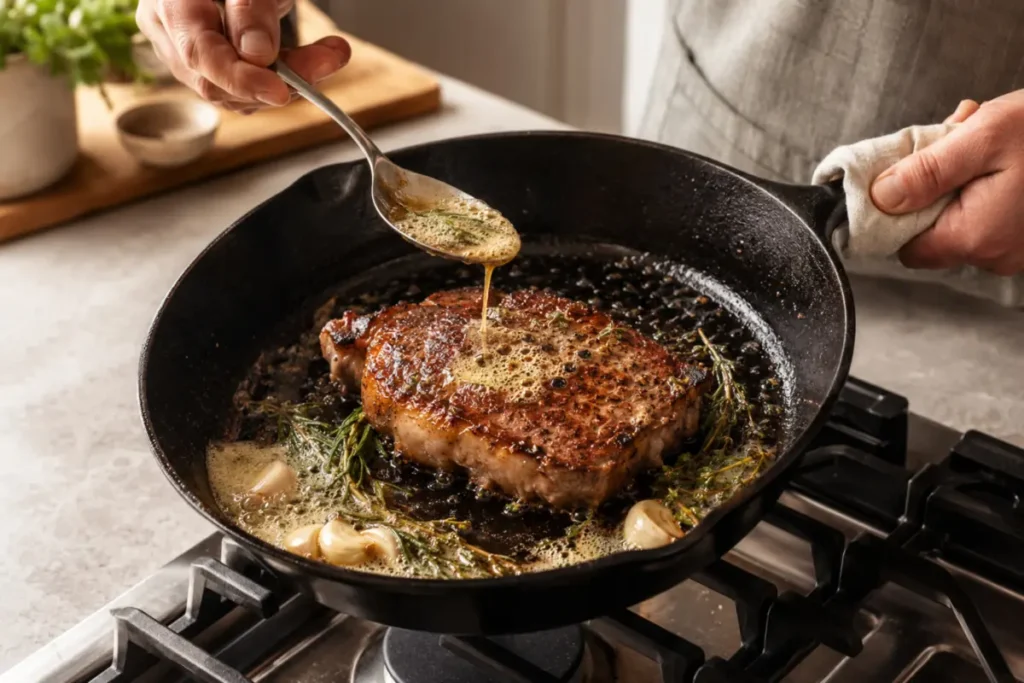
Reduce the heat slightly.
Add:
- Butter
- Garlic
- Rosemary or thyme
Tilt the pan slightly and spoon the melted butter over the steak for about one minute.
This technique adds flavor while helping finish the cooking process.
How to Cook Steak in the Oven
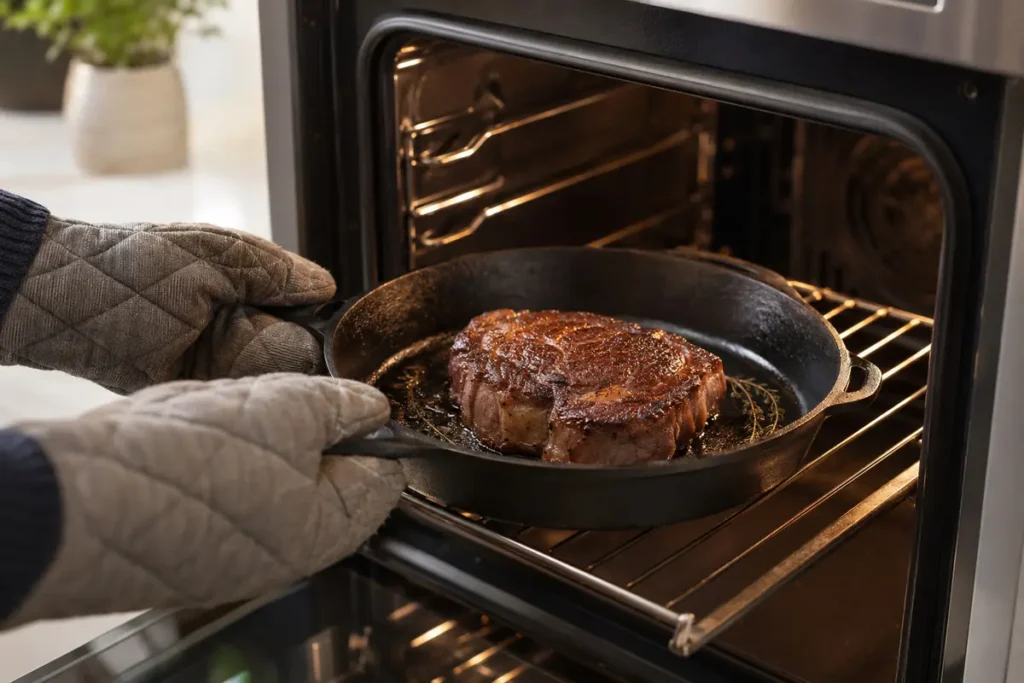
Thicker steaks often benefit from finishing in the oven.
After searing both sides:
- Transfer the skillet to a 400°F (204°C) oven.
- Cook for several more minutes depending on your preferred doneness.
- Remove when the internal temperature is just below your target, as it will continue cooking while resting.
Steak Doneness Guide
Using a meat thermometer is the most accurate way to cook steak.
| Doneness | Internal Temperature |
|---|---|
| Rare | 120–125°F |
| Medium Rare | 130–135°F |
| Medium | 140–145°F |
| Medium Well | 150–155°F |
| Well Done | 160°F+ |
Many steak lovers consider medium rare ideal because it stays juicy while developing excellent flavor.
Rest the Steak Before Cutting
One of the biggest mistakes people make is slicing into steak immediately.
Instead:
- Rest for 5–10 minutes
- Cover loosely with foil
This allows the juices to redistribute throughout the meat.
Slice Against the Grain
When serving, cut across the grain rather than with it.
This shortens the muscle fibers, making each bite more tender.
Common Mistakes to Avoid
Avoid these errors for consistently better steak.
Cooking Cold Steak
Cold meat cooks unevenly.
Skipping the Drying Step
Moisture prevents proper browning.
Flipping Too Often
Let the crust develop before turning the steak.
Using Low Heat
High heat creates the flavorful crust that steak is known for.
Not Resting the Meat
Cutting too early causes valuable juices to run out.
Best Side Dishes
A great steak pairs well with many classic sides.
Popular choices include:
- Mashed potatoes
- Roasted vegetables
- Garlic butter mushrooms
- Caesar salad
- Baked potatoes
- Grilled asparagus
- Creamed spinach
- Mac and cheese
Can You Grill a Steak Instead?
Absolutely.
Grilling creates smoky flavor while producing attractive grill marks.
Simply:
- Preheat the grill.
- Oil the grates lightly.
- Cook over high heat.
- Flip once.
- Check the internal temperature.
Rest before serving.
Storage and Reheating
If you have leftovers:
- Refrigerate within two hours.
- Store in an airtight container.
- Eat within 3–4 days.
To reheat:
- Warm gently in a skillet over low heat.
- Avoid microwaving for long periods, as it can dry out the meat.
Final Thoughts
Learning how to cook a steak is easier than many people think. By choosing a quality cut, seasoning it simply, using high heat, checking the internal temperature, and allowing the steak to rest before slicing, you can enjoy tender, juicy, restaurant-quality results at home. With a little practice, you’ll quickly discover the cooking method and doneness that best suits your taste.
Great meals are about more than just the main dish. Explore more cooking tutorials on AllHowToGuide for recipes, kitchen techniques, and practical tips to help you cook with confidence.
FAQs
1. What is the best steak for beginners?
Ribeye is an excellent choice because its marbling helps keep it juicy and forgiving during cooking.
2. Should I use butter when cooking steak?
Yes. Butter adds richness and is best added near the end of cooking to avoid burning.
3. How long should I rest a steak?
Let it rest for 5–10 minutes before slicing.
4. Is a meat thermometer necessary?
It’s highly recommended because it provides the most accurate way to achieve your preferred doneness.
5. Can I cook steak without a cast iron skillet?
Yes. A heavy stainless-steel pan or a hot grill also produces excellent results.
🍽️ Related Cooking Guides
Want to improve your cooking skills? Check out these helpful step-by-step guides: