
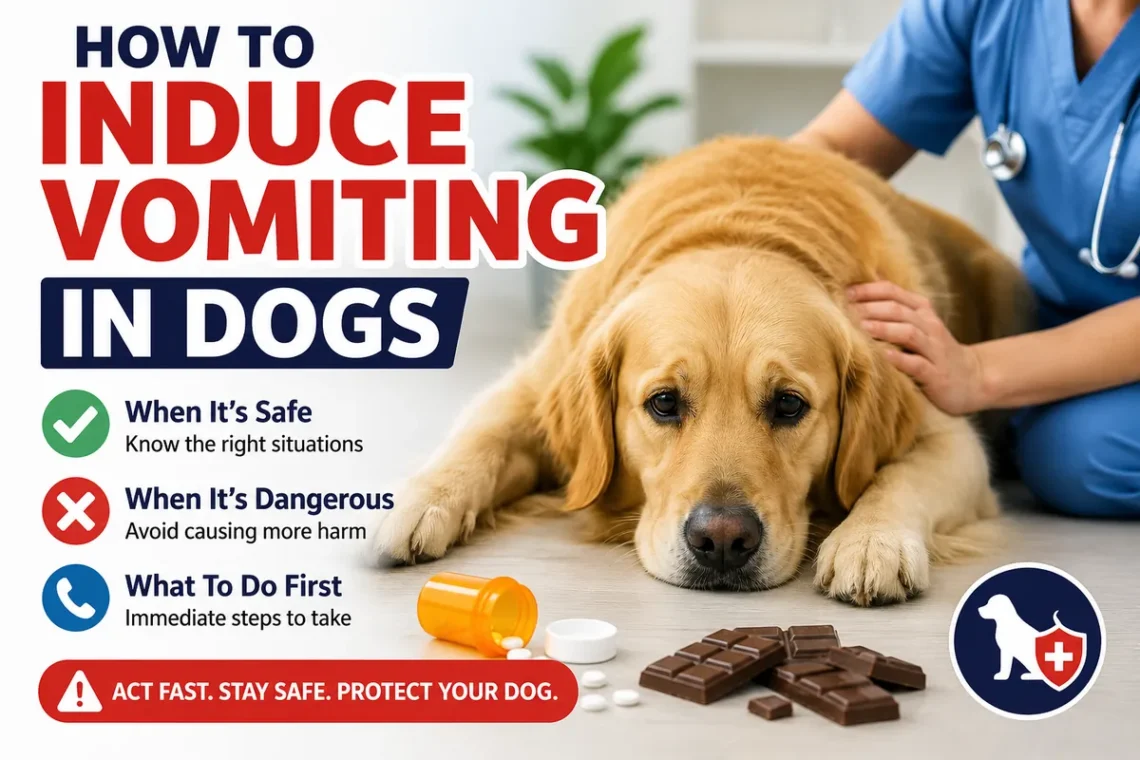
Few situations are as stressful for a dog owner as discovering that their pet has swallowed something they shouldn’t. Whether it’s chocolate, medication, household cleaners, or another potentially toxic substance, acting quickly is important. However, the first reaction should never be to make your dog vomit without knowing whether it is safe.
Many people search for how to induce vomiting in dogs because they want to help their pet immediately. While the intention is understandable, inducing vomiting is not always the safest solution. In some situations, it can actually make the problem worse and lead to serious complications.
This guide explains when vomiting may be considered by a veterinarian, when it should never be attempted, and what steps every responsible dog owner should take before making any decisions.
Why Dogs Swallow Harmful Objects
Dogs are naturally curious animals. They often explore the world using their mouths, which increases the risk of swallowing dangerous items.
Common examples include:
- Chocolate
- Human medications
- Grapes and raisins
- Household cleaning products
- Xylitol-containing gum or candy
- Batteries
- Coins
- Toys and clothing
- Rodent poison
- Certain poisonous plants
Puppies are especially likely to ingest foreign objects because they chew almost everything while exploring their surroundings.
Is Inducing Vomiting Always the Right Choice?
The simple answer is no.
Although many people search for how to induce vomiting in dogs, vomiting is not a universal treatment for poisoning or accidental ingestion. Veterinary professionals evaluate several factors before deciding whether vomiting is appropriate.
These include:
- What the dog swallowed
- How much was consumed
- The dog’s size and weight
- The dog’s medical history
- How long ago the incident occurred
- Whether the object is sharp, corrosive, or likely to become lodged
Only after considering these details can a veterinarian determine whether inducing vomiting is the safest option.
Situations Where Vomiting Can Be Dangerous
There are several circumstances where making a dog vomit can cause additional injury instead of helping.
These include:
Swallowing Corrosive Chemicals
Products such as bleach, drain cleaners, acids, or oven cleaners can burn the throat twice—once when swallowed and again if vomited back up.
Sharp Objects
Items like needles, glass, fish hooks, or sharp bones may tear the esophagus or mouth if brought back up.
Petroleum-Based Products
Gasoline, kerosene, lighter fluid, and similar substances can easily enter the lungs during vomiting, leading to aspiration pneumonia.
Dogs Showing Neurological Symptoms
If a dog is weak, unconscious, having seizures, or struggling to breathe, forcing vomiting increases the risk of choking.
Brachycephalic Breeds
Dogs with short noses, including Bulldogs, Pugs, Boston Terriers, and French Bulldogs, already have narrower airways. Vomiting may increase their risk of aspiration.
What You Should Do Immediately
If you suspect your dog has eaten something toxic, stay calm and gather information before taking action.
Useful details include:
- What was swallowed
- Approximately how much
- When it happened
- Your dog’s weight
- Any symptoms your dog is showing
Having this information ready allows a veterinarian to give faster and more accurate advice.
Contact a Veterinarian Right Away
Instead of searching online for emergency treatment, your first call should be to your veterinarian or an emergency animal hospital.
Veterinary professionals can quickly determine whether your dog needs:
- Immediate examination
- Monitoring at home
- Activated charcoal
- Blood tests
- IV fluids
- Endoscopy
- Surgery
- Other emergency treatment
Time is often more important than attempting home remedies.
What Information Will the Veterinarian Ask For?
During the call, expect questions such as:
- What breed is your dog?
- How old is your dog?
- What does your dog weigh?
- What exactly was swallowed?
- How long ago did it happen?
- Is your dog acting normally?
- Is your dog vomiting already?
- Has your dog experienced seizures or difficulty breathing?
Providing accurate answers helps determine the safest treatment.
Common Signs of Poisoning in Dogs
Not every poisoning causes immediate symptoms, but warning signs may include:
- Vomiting
- Diarrhea
- Drooling
- Weakness
- Loss of coordination
- Tremors
- Seizures
- Difficulty breathing
- Pale gums
- Collapse
- Unusual behavior
Any of these symptoms should be treated as a veterinary emergency.
Why Home Remedies Can Be Risky
The internet contains many home remedies claiming to solve poisoning in dogs. Unfortunately, some of these methods are outdated or unsafe.
Without knowing exactly what your dog swallowed, attempting treatment at home can:
- Delay proper medical care
- Cause choking
- Increase the risk of aspiration
- Worsen internal injuries
- Make future treatment more difficult
Even remedies that were once commonly recommended are no longer considered appropriate in every situation. Veterinary guidance has evolved as more evidence has become available.
How Veterinarians Decide on the Best Treatment
Every poisoning case is unique.
Instead of following one standard approach, veterinarians evaluate:
- The type of toxin
- The amount consumed
- The time since exposure
- The dog’s age
- Existing medical conditions
- Current symptoms
Treatment may involve observation, medications, activated charcoal, intravenous fluids, oxygen therapy, imaging, or surgery depending on the circumstances.
Preventing Poisoning Before It Happens
Prevention is always easier than emergency treatment.
Simple precautions include:
- Store medications in closed cabinets.
- Keep chocolate and candy away from pets.
- Secure household cleaning products.
- Avoid leaving trash within reach.
- Keep toxic plants outside your dog’s access.
- Supervise puppies during play.
- Store automotive chemicals safely.
- Keep batteries and small objects off the floor.
Creating a pet-safe home greatly reduces the chance of accidental poisoning.
When Every Minute Matters
Some toxins act very quickly, while others take several hours before symptoms appear.
Even if your dog seems completely normal, don’t assume everything is fine. Certain poisons damage organs before visible signs develop.
If you know or strongly suspect your dog swallowed something dangerous, contacting a veterinarian immediately is always the safest decision.
Final Thoughts
Searching for how to induce vomiting in dogs is often the first thing worried pet owners do after an accident. However, vomiting is not always the safest or most effective response. In some situations, it can actually increase the risk of serious injury.
The best course of action is to identify what your dog swallowed, avoid unverified home remedies, and contact a veterinarian or emergency animal hospital as quickly as possible. Professional advice ensures your dog receives the most appropriate treatment based on the specific situation, giving them the best possible chance of a full recovery.
(FAQs)
1. Should I make my dog vomit after eating something toxic?
Not necessarily. Whether vomiting is appropriate depends on what your dog swallowed, how long ago it happened, and your dog’s overall condition. Contact a veterinarian before attempting any treatment.
2. What items commonly poison dogs?
Chocolate, grapes, raisins, certain medications, xylitol, rodent poison, household cleaners, batteries, and some plants are among the most common hazards.
3. What are the first signs of poisoning in dogs?
Common symptoms include vomiting, diarrhea, drooling, weakness, tremors, seizures, difficulty breathing, and unusual behavior.
4. Can I rely on home remedies I find online?
It’s best not to. Home remedies may be ineffective or even harmful depending on the substance involved. A veterinarian can recommend the safest course of action.
5. How can I prevent accidental poisoning?
Store medications and chemicals securely, keep toxic foods away from pets, supervise curious puppies, and remove hazardous objects from areas your dog can access.