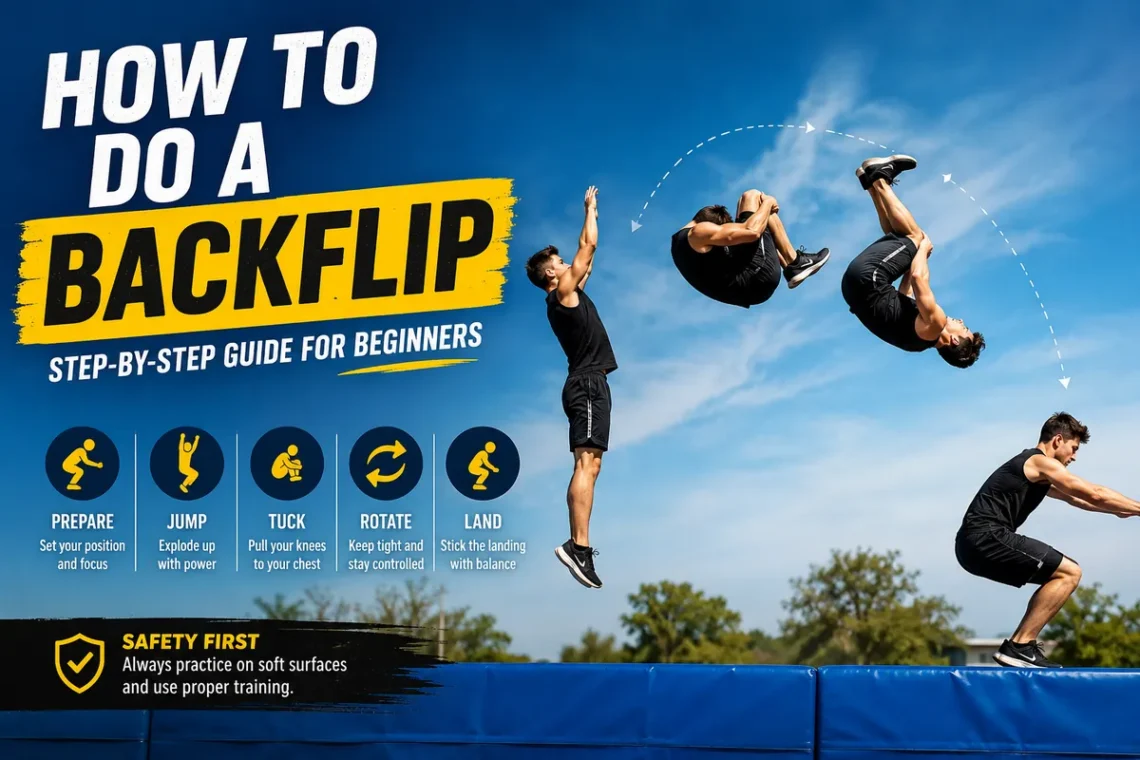
Learning how to do a backflip is a goal that excites many people, whether they are gymnasts, cheerleaders, parkour enthusiasts, or simply someone looking to master an impressive skill. A successful backflip combines strength, coordination, timing, flexibility, and confidence. While it may appear intimidating at first, breaking the movement into smaller steps makes it much easier to understand.
The most important thing to remember is that a backflip is not something you should attempt without preparation. Proper training, safe practice conditions, and gradual progression significantly reduce the risk of injury. This guide explains everything beginners should know before trying their first backflip.
What Is a Backflip?
A backflip is a backward rotation of the body through the air, landing on both feet after completing one full rotation. Unlike many other acrobatic moves, the body rotates without using the hands during the flip itself.
The movement relies on explosive leg power, a strong jump, proper body positioning, and maintaining control throughout the rotation. Although it looks like a trick that depends on bravery, it is actually a technique-based skill where correct mechanics matter far more than fearlessness.
Should Beginners Learn a Backflip?
Many beginners wonder whether this move is suitable for them. The answer depends on your current fitness level and your willingness to practice safely.
You don’t need to be a professional athlete, but you should have:
- Good overall body coordination
- Healthy knees and ankles
- Basic lower-body strength
- Core stability
- Confidence with simple jumping exercises
If you have previous gymnastics, trampoline, martial arts, or cheerleading experience, learning usually becomes easier because your body is already familiar with aerial movements.
Essential Safety Tips Before You Start
Safety should always come before learning tricks.
Before attempting any backward rotation:
- Practice on gym mats whenever possible.
- Have a qualified coach or experienced spotter nearby.
- Avoid concrete, hardwood floors, or uneven ground.
- Warm up your muscles thoroughly.
- Never attempt your first flip alone.
- Wear comfortable athletic clothing that allows full movement.
Many serious injuries happen because beginners rush into attempting full flips without first mastering the basics.
Warm-Up Before Practicing
A proper warm-up prepares your joints and muscles while improving flexibility and reducing injury risk.
Spend around 10 to 15 minutes performing:
- Light jogging or jumping jacks
- Bodyweight squats
- Lunges
- High knees
- Hip circles
- Shoulder rolls
- Ankle mobility drills
- Dynamic hamstring stretches
- Calf stretches
Finish with several powerful vertical jumps to activate your legs before training.
Build the Right Foundation
Before practicing flips, it’s helpful to strengthen the muscles responsible for jumping and body control.
Focus on exercises like:
Squats
Squats build powerful legs, which generate the upward force needed for rotation.
Box Jumps
These improve explosive jumping ability and teach proper takeoff mechanics.
Planks
A strong core helps maintain body control while rotating through the air.
Glute Bridges
These strengthen the hips, improving jumping power.
Calf Raises
Strong calves contribute to a more explosive launch from the ground.
Burpees
Burpees improve coordination, endurance, and athletic movement.
Training these exercises consistently creates a solid physical base before progressing to flips.
Learn Body Awareness First
Before attempting a full rotation, your body should become comfortable moving backward.
Useful beginner drills include:
- Backward rolls
- Jumping backward onto soft mats
- Tuck jumps
- Trampoline seat drops
- Backward bounce drills
These exercises improve spatial awareness, making the movement feel less intimidating.
Step-by-Step Guide
Understanding each phase separately makes the skill much easier to learn.
Step 1: Start With the Correct Position
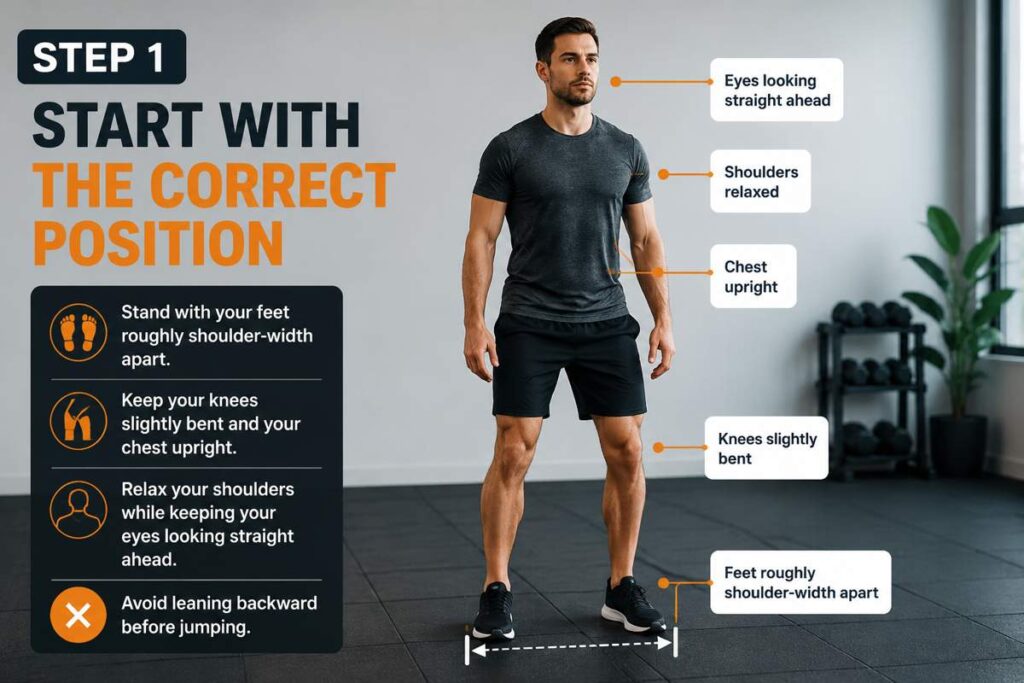
Stand with your feet roughly shoulder-width apart.
Keep your knees slightly bent and your chest upright. Relax your shoulders while keeping your eyes looking straight ahead.
Avoid leaning backward before jumping.
Step 2: Swing Your Arms
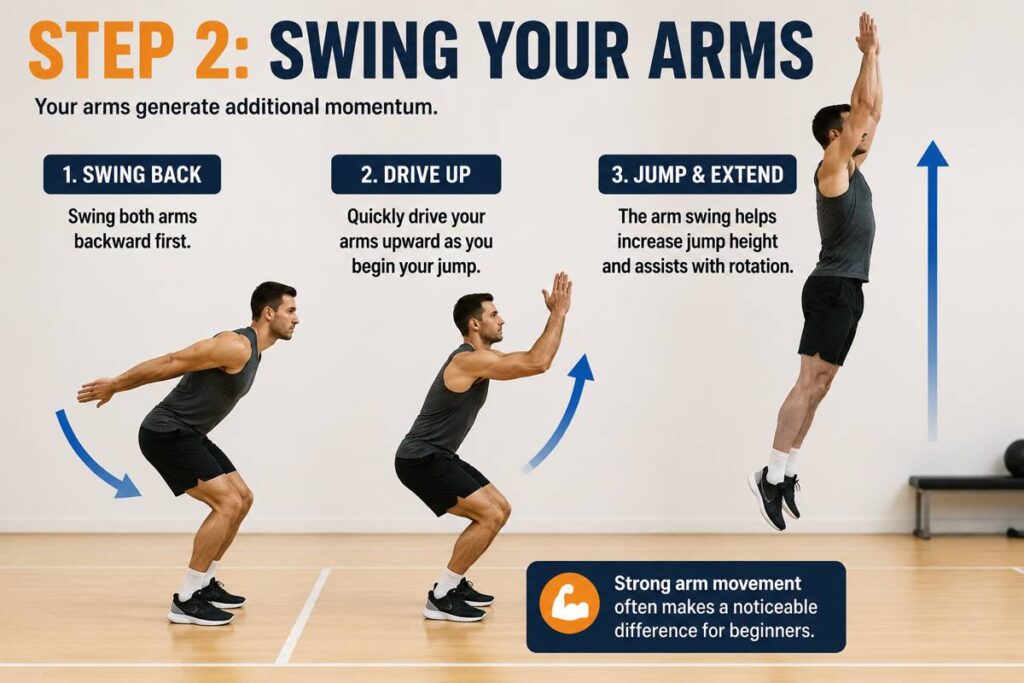
Your arms generate additional momentum.
Swing both arms backward first, then quickly drive them upward as you begin your jump. The arm swing helps increase jump height and assists with rotation.
Strong arm movement often makes a noticeable difference for beginners.
Step 3: Jump Straight Up
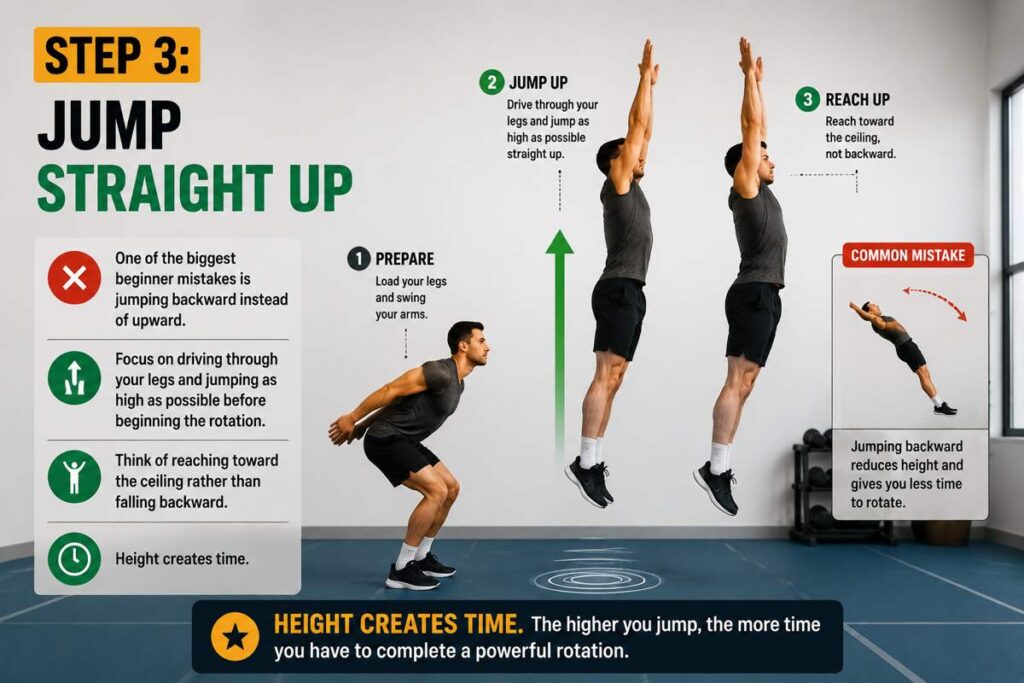
One of the biggest beginner mistakes is jumping backward instead of upward.
Focus on driving through your legs and jumping as high as possible before beginning the rotation.
Think of reaching toward the ceiling rather than falling backward.
Height creates time.
Step 4: Tuck Your Knees
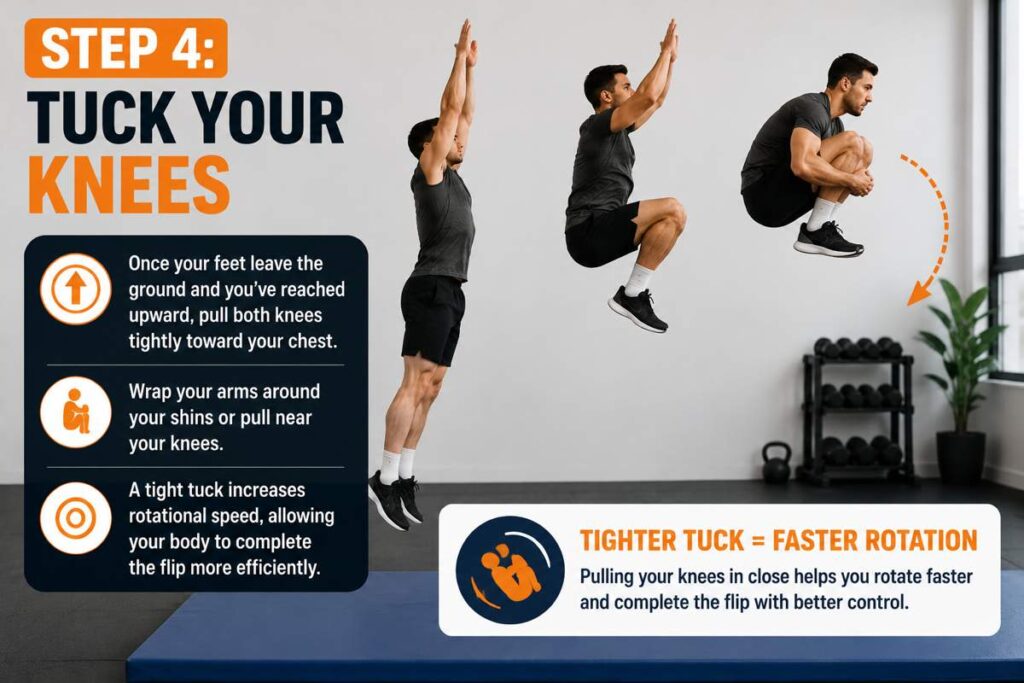
Once your feet leave the ground and you’ve reached upward, pull both knees tightly toward your chest.
Wrap your arms around your shins or pull near your knees.
A tight tuck increases rotational speed, allowing your body to complete the flip more efficiently.
Step 5: Spot the Landing
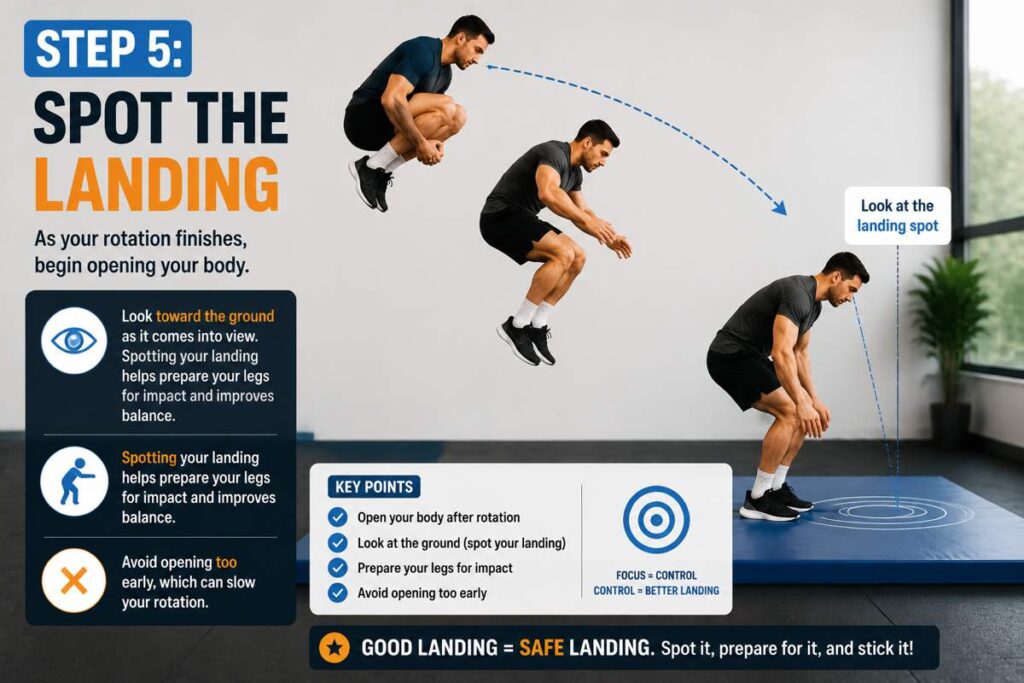
As your rotation finishes, begin opening your body.
Look toward the ground as it comes into view. Spotting your landing helps prepare your legs for impact and improves balance.
Avoid opening too early, which can slow your rotation.
Step 6: Land With Control
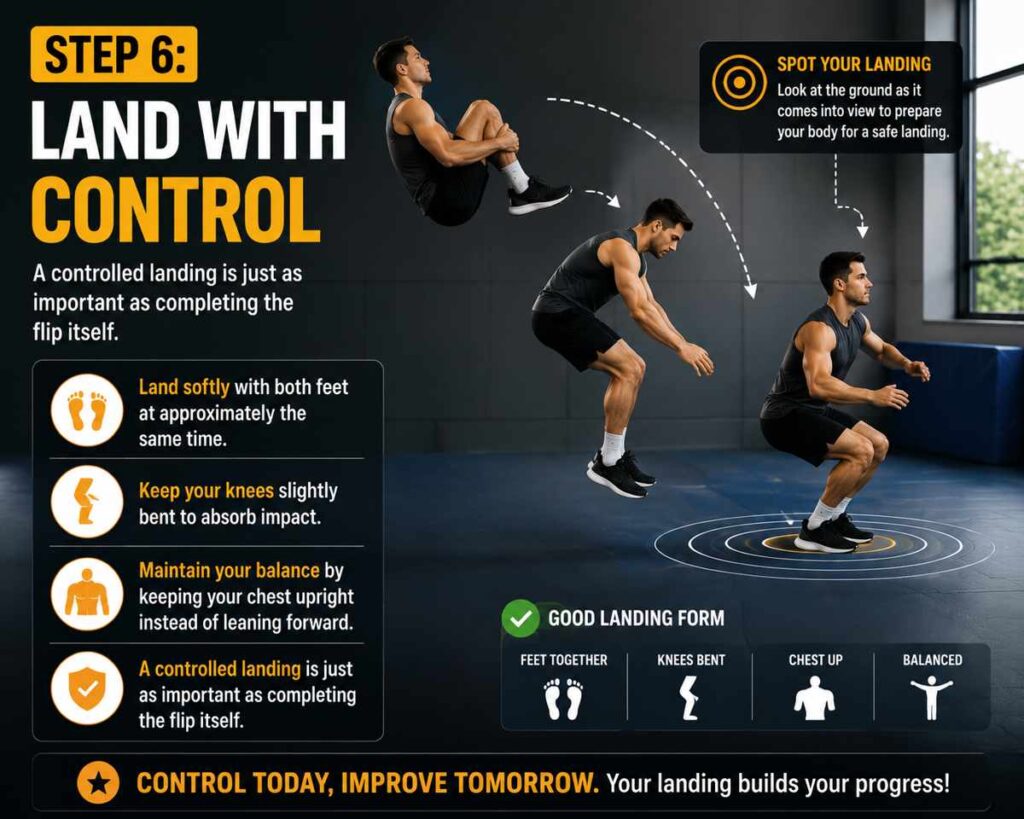
Land softly with both feet at approximately the same time.
Keep your knees slightly bent to absorb impact.
Maintain your balance by keeping your chest upright instead of leaning forward.
A controlled landing is just as important as completing the flip itself.
Common Mistakes Beginners Make
Many failed attempts happen because of simple technical errors.
Jumping Backward
Trying to throw yourself backward reduces height and often causes under-rotation.
Weak Jump
Without enough upward power, there’s not enough time to complete the rotation.
Opening Too Early
Extending your body before finishing the rotation slows your spin.
Loose Tuck
A loose tuck rotates much slower than a tight one.
Looking Back Too Soon
Throwing your head backward can disrupt body alignment and reduce control.
Correcting these mistakes usually leads to much faster improvement.
Practice Progressions That Work
Rather than attempting a complete flip immediately, progress through increasingly difficult drills.
A common progression includes:
- Vertical jumps
- Tuck jumps
- Backward rolls
- Assisted flips with a coach
- Trampoline backflips
- Foam pit practice
- Soft mat practice
- Ground backflip under supervision
Each stage builds confidence while reducing unnecessary risk.
How Long Does It Take to Learn?
There isn’t one timeline that fits everyone.
Some athletic individuals may learn within a few training sessions under professional instruction.
Others may need several weeks or even months to build sufficient strength, confidence, and technique.
Consistency matters much more than speed.
Regular practice with proper coaching typically produces better results than attempting many unsafe repetitions.
Can You Learn at Home?
Learning at home is generally not recommended unless you already have advanced gymnastics experience and proper equipment.
Professional gyms offer:
- Thick crash mats
- Foam pits
- Trampolines
- Certified instructors
- Safe training environments
Without these safety measures, the chance of injury increases significantly.
Mental Confidence Is Just as Important
Fear is one of the biggest obstacles for beginners.
Confidence doesn’t come from forcing yourself to flip. It develops through gradual progress, repeated drills, and successful practice sessions.
Instead of rushing, focus on mastering one step at a time.
Every small improvement helps your brain become more comfortable with the movement.
Is a Backflip Dangerous?
Like any acrobatic skill, a backflip carries risks when performed incorrectly.
Possible injuries include:
- Wrist injuries
- Ankle sprains
- Knee injuries
- Neck injuries
- Back injuries
- Head injuries
Most of these risks can be reduced through proper instruction, safe equipment, adequate warm-ups, and gradual progression.
Attempting advanced skills beyond your current ability is one of the biggest causes of accidents.
Final Thoughts
Mastering a backflip is a rewarding achievement that requires patience, preparation, and safe practice. Instead of focusing on completing the flip as quickly as possible, concentrate on building strength, learning proper technique, and progressing through each training stage carefully.
With consistent practice, professional guidance, and the right environment, many beginners successfully develop the skills needed to perform this impressive movement with confidence. Taking your time not only improves your technique but also helps prevent unnecessary injuries, making the learning process both safer and more enjoyable.
(FAQs)
1. Can anyone learn a backflip?
Most healthy people can learn with proper coaching, physical preparation, and consistent practice in a safe environment.
2. Do I need to be flexible to perform a backflip?
Basic flexibility helps with movement and injury prevention, but explosive strength, coordination, and technique are more important.
3. Is learning on a trampoline easier?
Yes. Trampolines provide additional height and more time to complete the rotation, making them useful for beginner training under supervision.
4. How often should I practice?
Practicing two to four times per week allows steady improvement while giving your muscles enough time to recover.
5. What is the biggest mistake beginners make?
The most common mistake is jumping backward instead of jumping upward first, which reduces height and makes completing the rotation much more difficult.